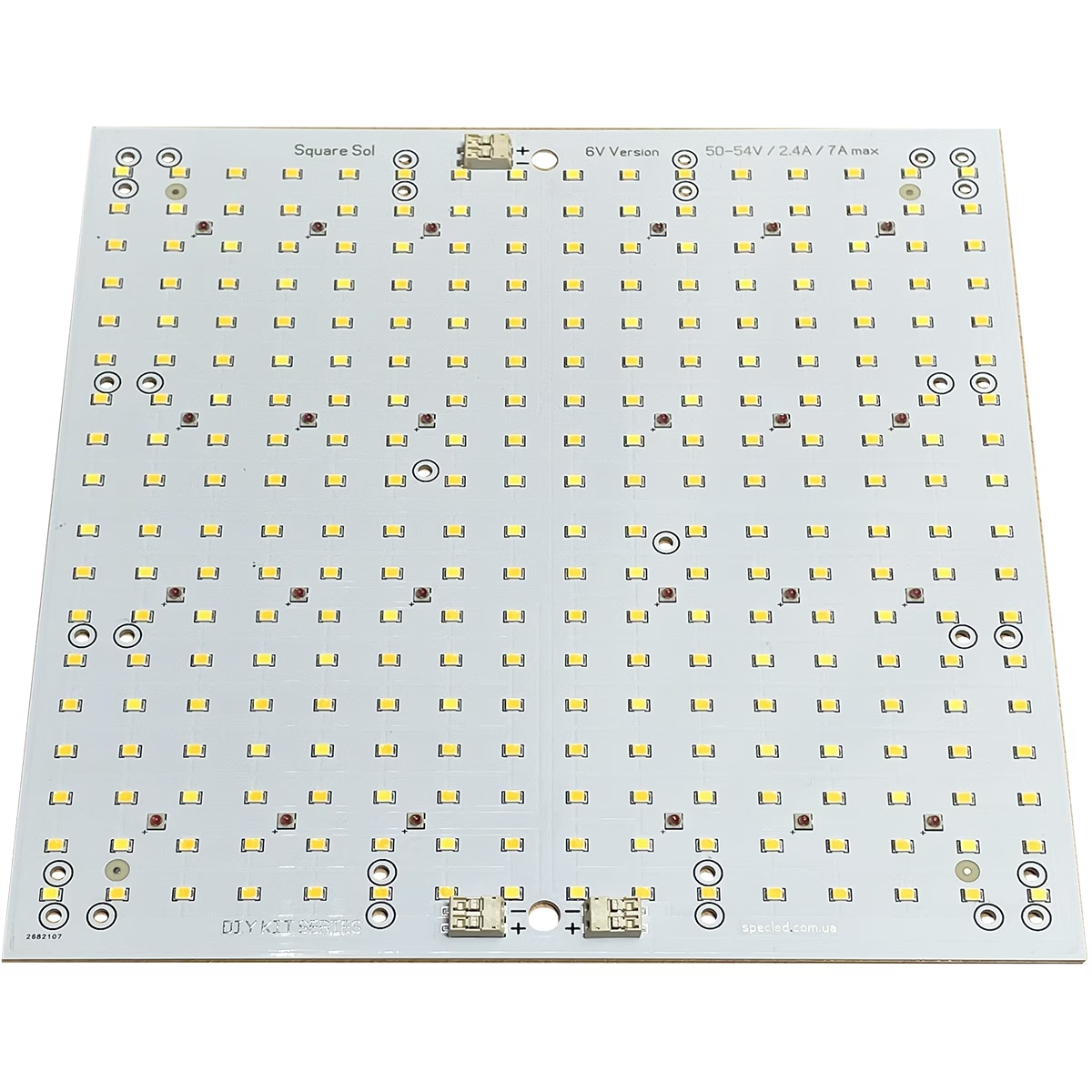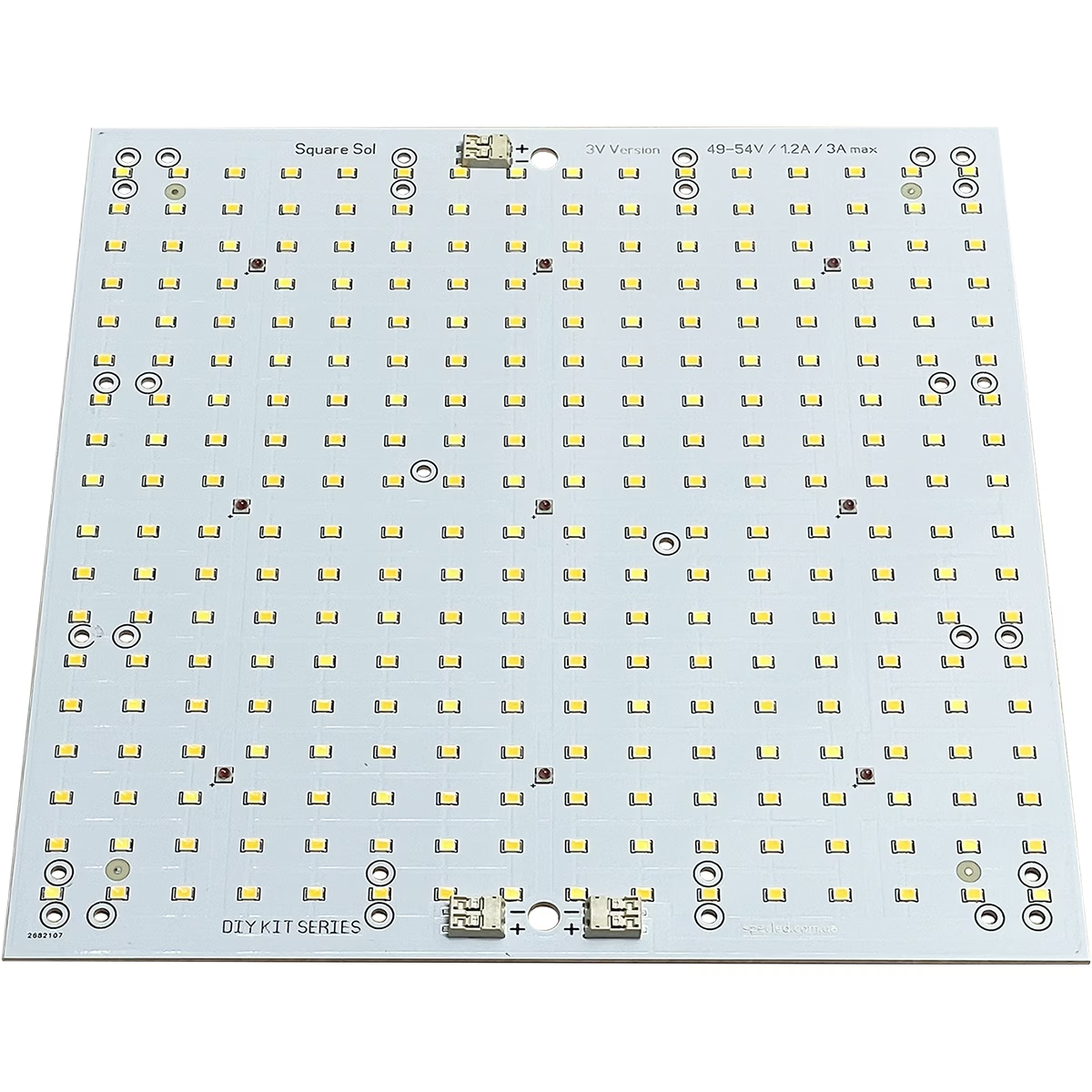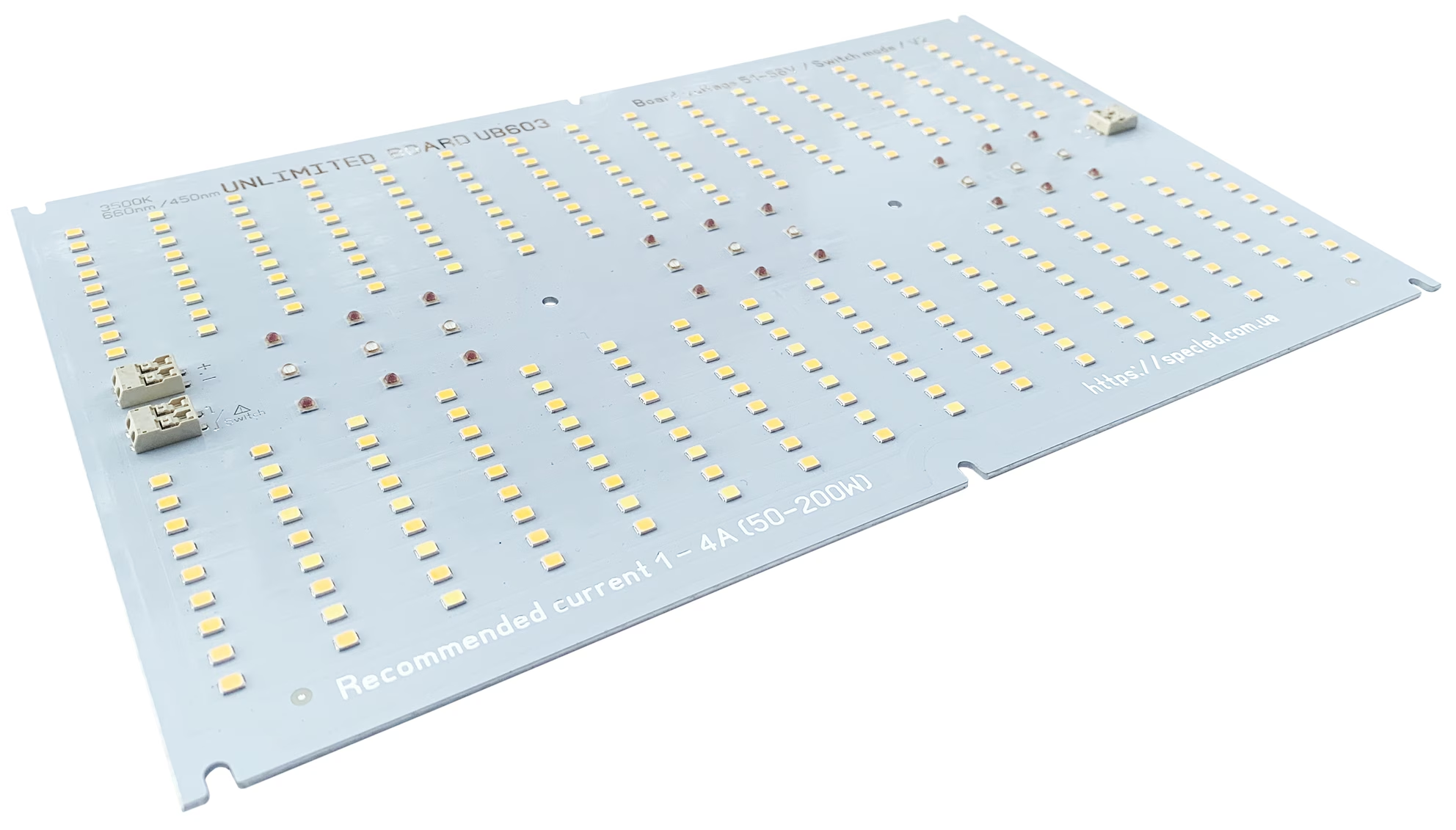
Designing a reliable LED lighting system, for example: a grow light for a greenhouse, aquarium light, a powerful street floodlight, or a designer chandelier — begins with selecting LEDs and an LED driver according to specified criteria. An LED (Light Emitting Diode) is a semiconductor device with a non-linear current-voltage (I-V) characteristic. This means that even the slightest change in voltage can lead to an avalanche-like increase in current, overheating, and degradation of the chip, and as a result, the failure of the fixture.
That is why ordinary power supplies (with a constant voltage of 12V or 24V, etc.) are not suitable for high-power LED arrays and COB modules. LEDs require specialized sources of stable current — LED drivers (Constant Current, CC).
In simple LED lighting systems, capacitive dropper LED drivers can also be used. Using our calculator, you can easily calculate the dropper capacitor capacitance ↗ for the required current and voltage. The main advantage of capacitive dropper LED driver circuits is their simplicity and reliability.
Basics: why is a proper LED power supply calculator approach important?
From my own experience, a common mistake beginners make when building fixtures is confusing constant voltage (CV) sources with constant current (CC) sources.
If you are using a standard LED strip, it already has current-limiting resistors installed. It needs a regular 12V or 24V power supply. In this case, using an LED power supply calculator logic comes down to simply summing the power of all strip segments plus adding a safety margin of 15-20%.
However, if you are working with high-power LEDs (e.g., 1W, 3W, 5W) or arrays (COBs), they do not have resistors. It is important to note that powering LEDs through current-limiting resistors is the simplest and cheapest method, but this method loses a lot in efficiency because a large part of the energy goes into heat through the resistors. LEDs have one specific feature — when the chip heats up, its internal resistance drops. If a fixed voltage is applied to it, as the temperature rises, the current will start to grow uncontrollably. This process is called "thermal runaway".
To prevent this from happening, an LED driver is used. It continuously measures the current in the circuit and automatically adjusts (lowers or raises) the output voltage to keep the current at a strictly defined level — for example, exactly 700 mA. Thus, the driver protects the diodes from overheating and ensures their claimed lifespan of 50,000 hours.
How to choose an LED driver: a step-by-step engineering algorithm
Selecting a current source is a mathematical task that requires knowing the characteristics of your LED circuit. Let's break this process down step by step.
Step 1: Determining the operating current (I, mA)
First, you need to choose the operating current. Look at the datasheet for your LEDs. Usually, the manufacturer specifies the nominal (Test Current) and the maximum (Absolute Maximum) current.
- Example: For popular grow light LEDs, the nominal current might be 350 mA or 700 mA, and the maximum — 1000 mA (1A) or even 2000mA (2A).
- Recommendation: To increase efficiency (μmol/J or lm/W) and reduce heating, engineers often "underload" the diodes, feeding them a current slightly below the nominal one.
Step 2: Calculating the forward voltage of the circuit (Vf, V)
LEDs in fixtures are most often connected in series or in series-parallel groups. With such a connection, the current in the circuit remains unchanged (the very one the driver outputs), and the voltage drop across each diode in one series string is summed up. If you have 10 LEDs in a series string, and the forward voltage (Vf) drop across each is 3.0 V, then the total string voltage will be: 10 pcs * 3.0 V = 30 Volts. Note that the number of identical parallel-connected strings does not affect the total voltage.You can also use our LED voltage drop calculator ↗ for single-type or mixed circuits.
It is important to consider the temperature coefficient. When heated, the Vf of the LED drops slightly (by about 2-4 mV per degree). Therefore, the driver must have an output voltage window into which your circuit will fall at all temperatures (from cold start to full warm-up). For instance, the driver may have an output voltage range of 20-32 volts for our example, which would be sufficient.
Step 3: Calculating total power (P, W)
Knowing the current and the total voltage, we can calculate the electrical power the circuit will consume. The standard formula is: P = I * V. For our example (current 700 mA = 0.7 A, voltage 30 V): P = 0.7 A * 30 V = 21 W.
Quick selection using an online LED driver calculator
So you don't have to calculate all these parameters manually and cross-reference them with hundreds of PDF datasheets from power supply manufacturers, we have developed a special LED driver calculator widget. You simply enter the desired current (e.g., 1050 mA) and the voltage of your circuit (e.g., 36 V). The algorithm will automatically calculate the power and filter a database of over 170 industrial drivers, showing only those whose "voltage window" and maximum power perfectly match your task.
Alternatively, you can use the second mode when you want to replace a cheap original driver on your fixture with a high-quality one without flicker; you can enter the output parameters from the driver you have and see a list of suitable driver models. This is also a fairly frequently asked question.
Control types: choosing a dimming protocol
Modern light should be smart. Dimming (brightness control) allows you not only to save electricity but also to create proper lighting scenarios. When searching for a current source, you will encounter several main standards:
- Non-dimmable: The simplest and most reliable current sources. They simply output the set current when 220V/110V is applied. Excellent for street lighting, simple signs, or basic home lighting.
- Analog dimming (1-10V / 3-in-1): The classic standard. The driver has two additional wires. By changing the voltage on these wires from 1 to 10 Volts, you change the brightness from 10% to 100%. Mean Well often uses "3-in-1" technology, which allows dimming the driver in three ways: 1-10V signal, PWM signal, or a regular 100 kOhm potentiometer (resistor).
- DALI-2: A digital professional standard (Digital Addressable Lighting Interface). Each driver has its own digital address on the network. This allows individual control of fixtures via two wires, even if they are on the same mains line. The DALI-2 standard provides two-way communication: the driver can report to the controller about an LED failure or overheating.
- Casambi (Bluetooth Wireless): The modern trend in wireless control. Drivers supporting Casambi (or similar protocols like basic Bluetooth Mesh) create a self-organizing wireless network. You only need a smartphone to control it. This is ideal for projects where it's impossible to route additional control cables. It is also a good technology for apartments.
Brand and series catalog: what is inside our database?
The accuracy and reliability of your system depend on the quality of the components. Detailed parameters of 175 proven industrial standard models from four leading global manufacturers: Mean Well, Helvar, Tridonic, and Lifud are loaded into our database. Let's take a closer look at the specifics of each series so you understand exactly which driver the widget recommends.
Mean Well Drivers (Taiwan)
The undisputed leader of the global power supply market. They are famous for their reliability (MTBF often exceeds hundreds of thousands of hours) and a huge assortment. Our database presents 77 models from four of the most popular series.
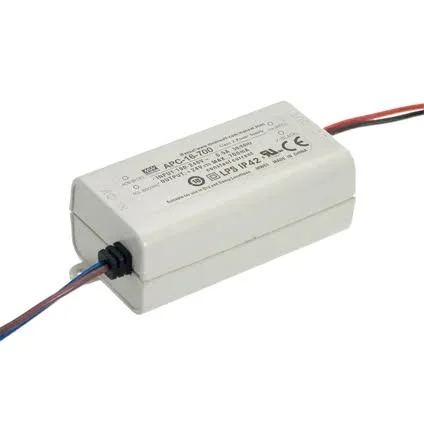
- APC Series (Plastic Case, IP42): Ultra-compact current sources in a plastic case. Designed for indoor use (IP42). Characterized by low price and reliability. Non-dimmable. Ideal for small interior fixtures and furniture lighting. Power ranges from 8 to 35 W (models APC-8, APC-12, APC-16, APC-25, APC-35).
- LPC Series (Plastic Case, IP67): An excellent choice for damp rooms or outdoor applications. Fully potted with compound (IP67), protected from dust and water. These are the "workhorses" for architectural lighting and lightboxes. Non-dimmable. The database includes models from 20 to 150 W (LPC-20, LPC-35, LPC-60, LPC-100, LPC-150).
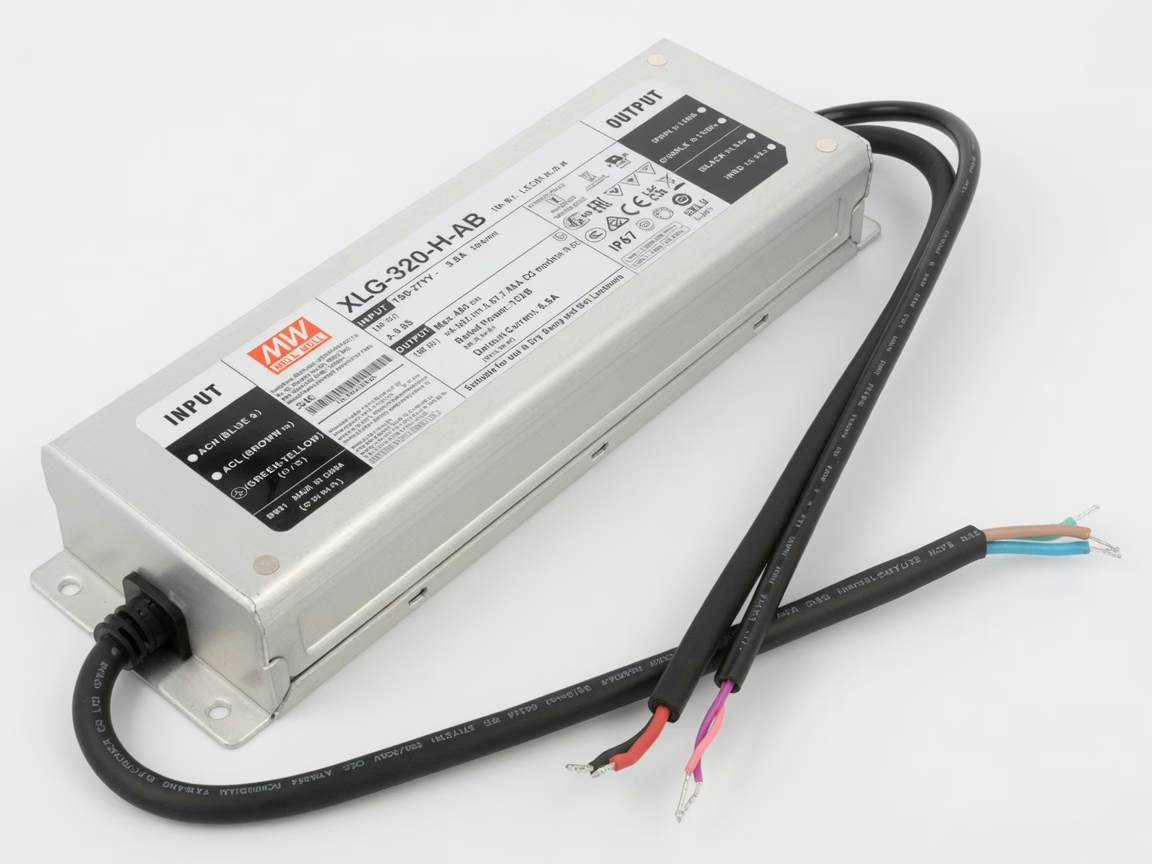
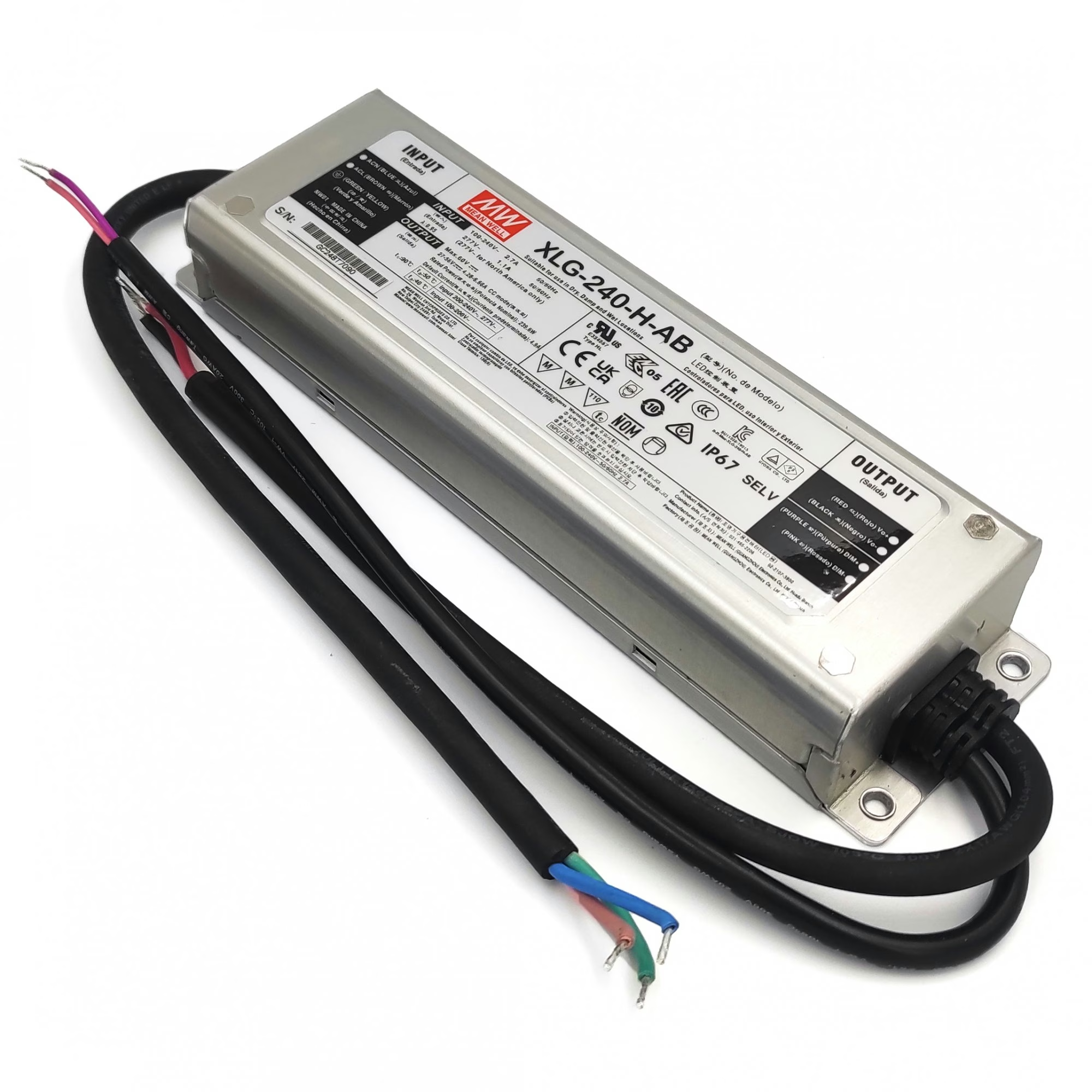
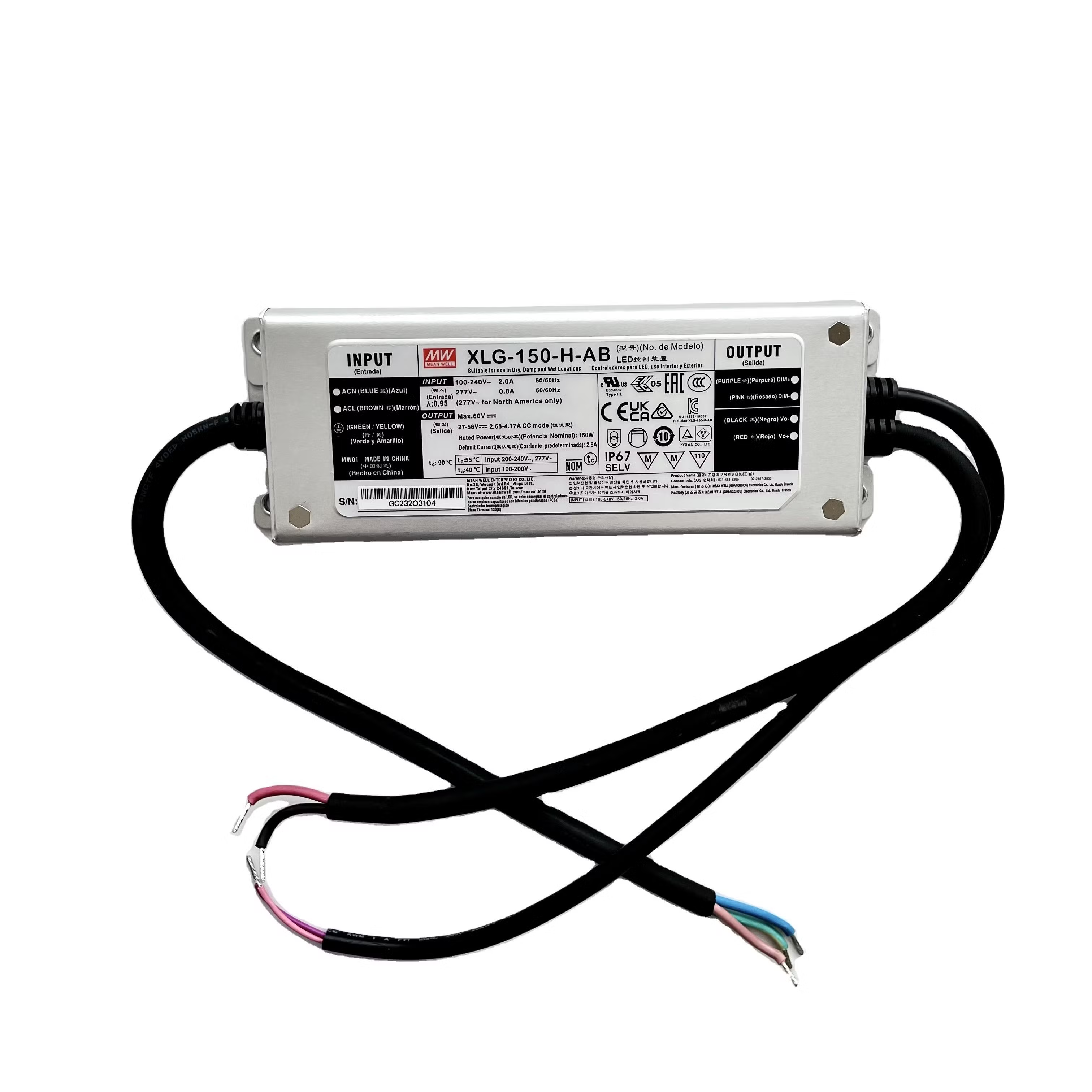
- XLG Series (Metal Case, IP67, Constant Power Mode): An innovative series in a compact metal case. The main feature of XLG is the constant power mode. This means that the same driver can deliver full power across a wide range of currents and voltages (you just need to tweak the built-in potentiometer). Our database contains "AB" modifications (e.g., XLG-150-H-AB), which means the presence of built-in current adjustment and support for 3-in-1 dimming. If you need XLG series drivers without dimming support, choose a model with the letter "A" at the end. To assist technicians, we have developed a widget that helps answer the question "how to configure a Mean Well XLG series driver↗". It allows you to visually understand how to read the current-voltage (I-V) characteristics of an LED driver.
- HLG Series (Premium Metal Case, IP67): A premium line, a legend in the world of grow lights and industrial fixtures. All-metal body, highest efficiency (up to 95%), ability to work at extreme temperatures (from -40°C to +90°C on the case), and a 7-year warranty. Models in the database cover power from 60 W to an impressive 600 W (HLG-60H-C, HLG-320H, HLG-600H).
Helvar Drivers (Finland)
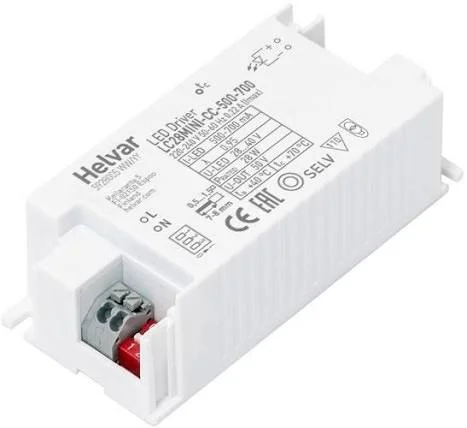
A Scandinavian brand, one of the pioneers in digital lighting control. Their specialty is highest quality interior, commercial, and office lighting with zero flicker. 86 models of this brand (IP20) are loaded in our database, divided into three form factors:
- LL Series (Linear / Long): Drivers in long and narrow metal cases, designed specifically for installation into aluminum profiles of linear fixtures.
- Models with the -CC- index (Constant Current) are basic non-dimmable variants where current is set by a resistor. Some newer models (e.g., LL50SE-CC-350-1400-NFC) support current programming via NFC using a smartphone.
- Models with the -DA- or -FD- index are intelligent DALI/DALI-2 drivers. They are ideal for integration into smart home systems (KNX) or commercial Building Management Systems (BMS).
- LC and LL Compact Series (Compact): Drivers in square or rectangular "compact" cases. Suitable for recessed ceiling lights (Downlights), track spotlights, and pendant lamps where case length is critical.
- This group also includes Active+ models — these are intelligent drivers with a built-in autonomous sensor that adjust the light themselves depending on the presence of people and daylight, requiring no external programming.
- LC MINI Series: Ultra-compact solutions (Tiny/Mini) for designer fixtures with extremely limited space inside the housing. Models ranging from 12 to 43 W, both standard and with DALI protocol support.
Tridonic Drivers (Austria)
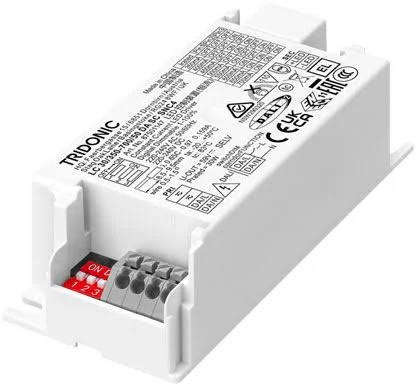
A European giant known for its innovations and strict adherence to light quality standards (no flicker, deep dimming down to 1%). The database features 6 selected premium models from the LC series:
- LC flexC Series: Reliable non-dimmable drivers for commercial applications (e.g., LC 75/500-1400/54 flexC). The current is selected by installing a special resistor (I-SELECT 2 plug).
- LC D4i Series: Latest generation drivers supporting the digital DALI-2 D4i standard (e.g., LC 58/750-1400/54 D4i). This standard allows the driver to collect and transmit data on power consumption, temperature, and operating hours (Data analytics) to the network.
- LC bDW Series (basicDIM Wireless): Drivers with a built-in Bluetooth chip (Casambi protocol). They allow creating wireless mesh networks (17W and 38W bDW models).
Lifud Drivers (China)
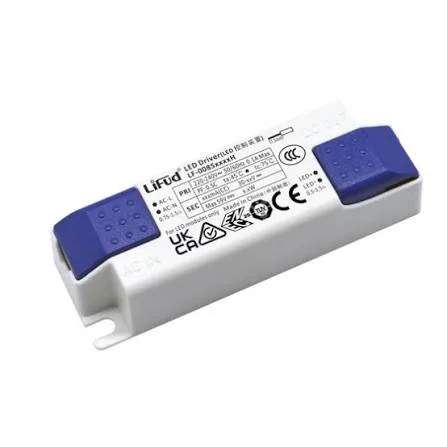
One of the most technological and fastest-growing Chinese brands, offering an excellent price-quality ratio. Their products are massively used in commercial lighting worldwide.
- LF-GIF / LF-BCT Series (IP20): Compact drivers for interior fixtures (downlights, panels). The LF-BCT013B model has an onboard Casambi wireless module.
- LF-FHB Series (IP65): Specialized round-shaped power supplies for industrial pendant lights (High Bay / "Bell"). Equipped with powerful surge protection, 3-in-1 dimming, and IP65 protection. Ideal for warehouses, factories, and sports arenas (100W, 150W, 200W models).
Summary
Assembling a high-quality LED fixture does not tolerate approximate calculations. Too high an open-circuit voltage will burn the diodes, too low will not allow them to light up, and an incorrectly selected current will lead to incorrect operation of the LED lighting device or rapid degradation of the phosphor and a drop in luminous flux.
Using an LED power supply calculator is always a search for balance between the voltage of your circuit and the datasheet windows (ranges) of the current source. By utilizing our calculator and choosing products from trusted brands (Mean Well, Helvar, Tridonic, Lifud), you guarantee your lighting system many years of uninterrupted and efficient operation.
The ideal load on an LED driver should be within 80-95% of its stated maximum power.