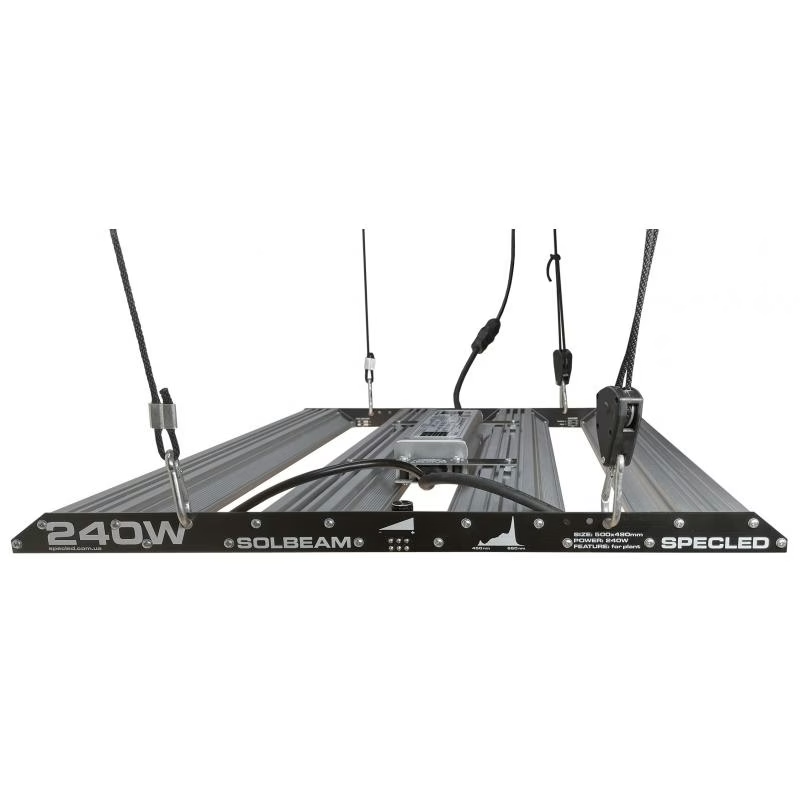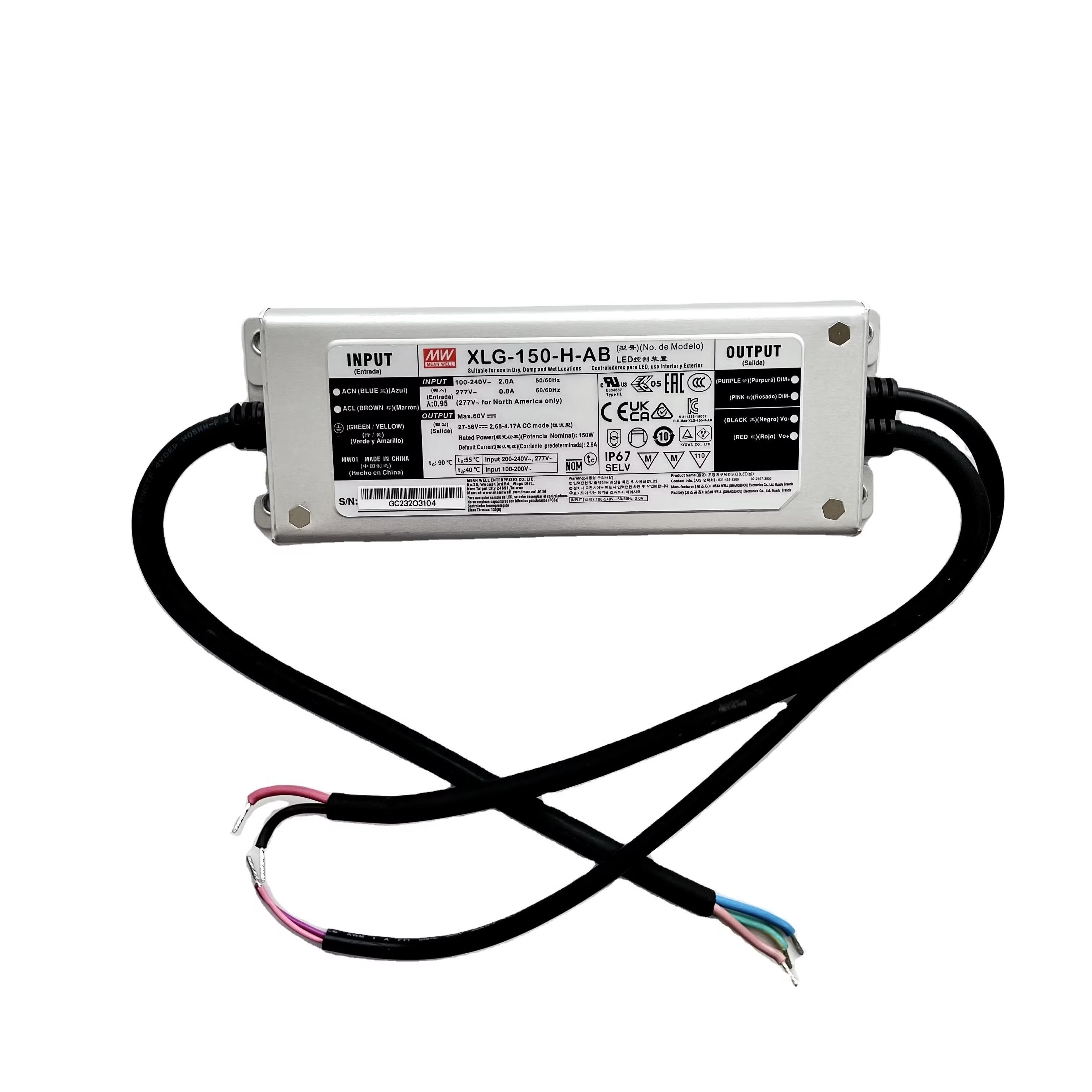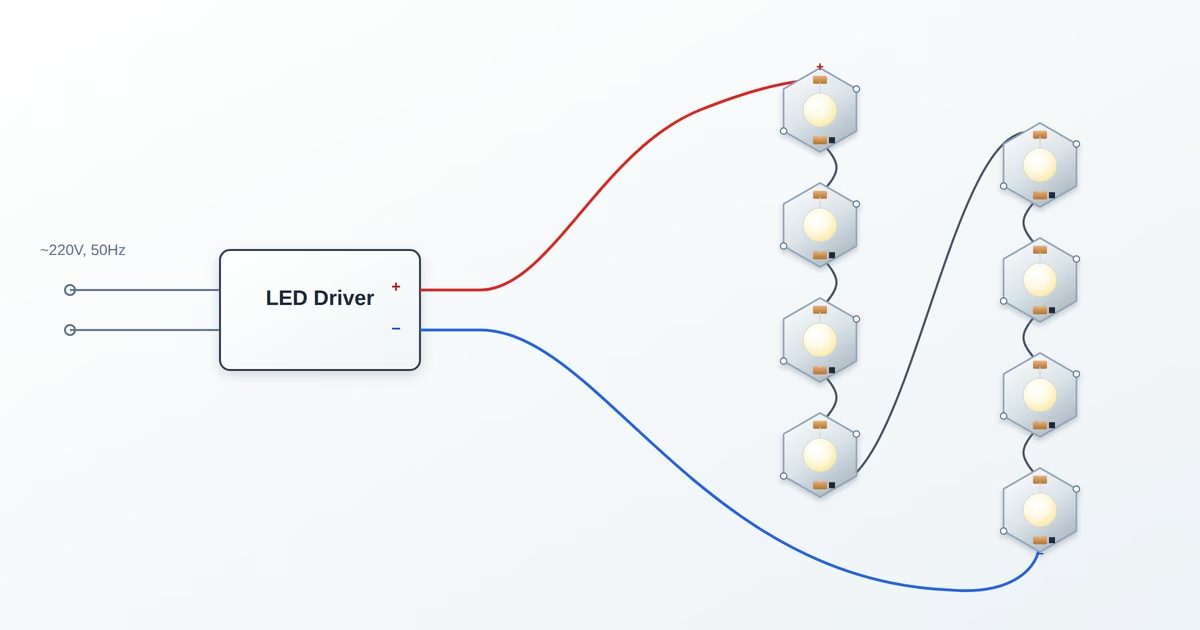
Building your own LED fixture is a great way to optimize plant lighting for your specific needs. But as soon as it comes to powering the LEDs, many DIY beginners make a critical mistake that leads to burnout of components or other issues. In this article, I will explain how to properly select an LED driver without complex formulas, using simple math and our interactive calculator.
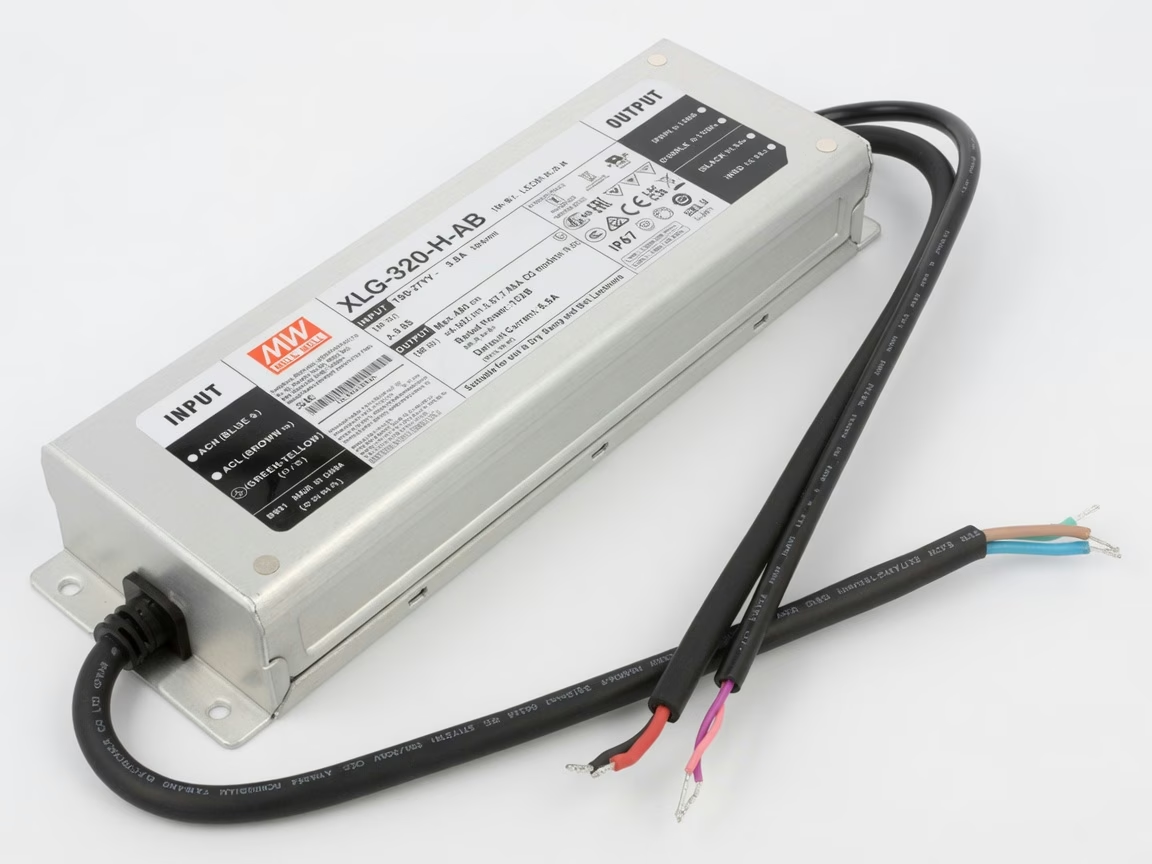
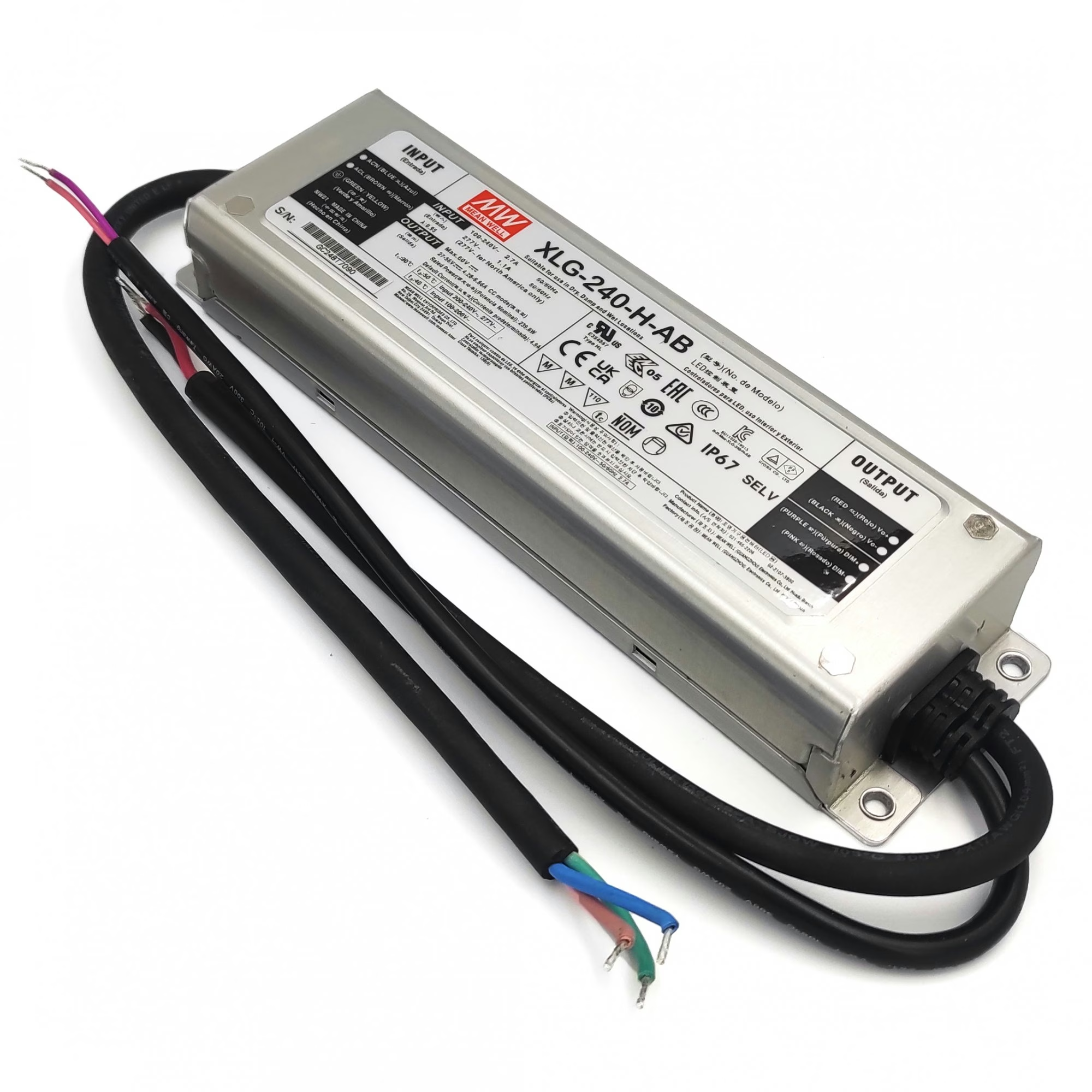
Constant Current (CC) LED driver is a specialized electronic unit operating in current stabilization mode. It maintains the target current by controlling the output voltage through a feedback loop within a specific range, which, in turn, depends on the driver's model and power rating.
The Main Misconception: "I need a driver based on wattage"
The most common mistake sounds like this: "If I have 10 LEDs at 5 Watts each (total 50 Watts), then I just need a 50W driver."
If you go to the store and buy the first "50W" driver you see, you risk either not lighting them at all or burning them out instantly. A driver is not selected by total wattage, but by operating current and output voltage range.
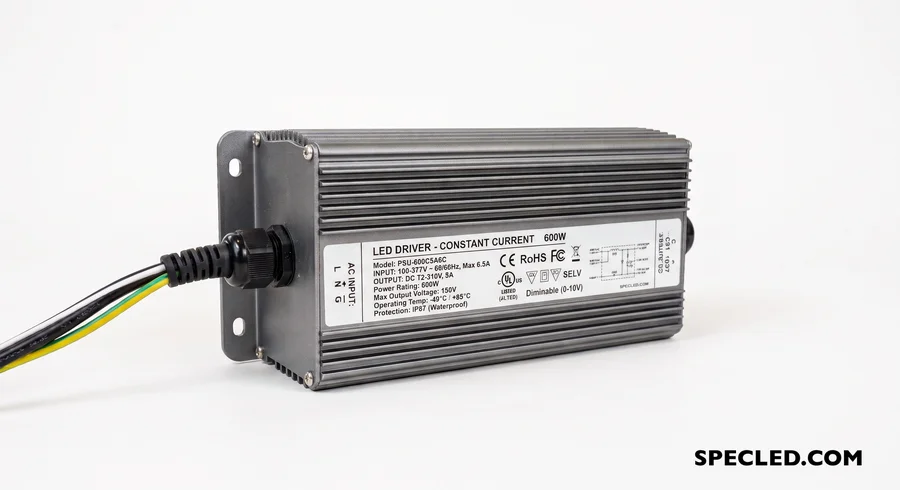
Remember! An LED driver is NOT a power supply unit!
What to know before calculating (Input data)
To select a power source (Driver) for a series circuit of high-power LEDs, we need to know two things:
- Nominal Current (I): For a 1W mode, it is usually 300–350 mA; for 3W — 600–700 mA; for 5W — 1000–1050 mA.
- Voltage drop per LED crystal (Vf): This parameter depends on the LED color.
Voltage drop (Vf) reference at 350 mA:
- White, blue, green, UV: average 3.1–3.4 Volts.
- Red, yellow, far red: average 2.0–2.4 Volts.
*When increasing current to 700 mA, the crystal voltage rises by about 0.2V. This is heavily dependent on LED quality: cheap "no-name" red LEDs can draw up to 2.5 Volts at 600-700mA. Premium-level LEDs draw 1.9-2.1 Volts. These numbers indicate a large difference in LED efficacy.
Online circuit parameters calculator
To avoid calculating Volts in columns and Amps in hours, we have developed a convenient widget. The LEDs in the widget are structured by the average voltage drop for a given crystal type.
How to use the calculator:
- Use the sliders to indicate how many red/yellow and white/blue LEDs you have soldered into a series circuit (plus to minus). If all LEDs are the same, select the required type and set the second slider to zero.
- Set the desired operating current (e.g., 350 mA for a gentle 1W mode).
- In the right column, the calculator will instantly show the total voltage of your circuit and the recommended driver power (already including a 20% safety margin).
How to buy the right driver based on the calculator? Not for free, of course :)
Let's say the calculator showed you "Required Voltage Range: 25.6 V" and 350 mA.
You need an LED driver (constant current source) that covers 25.6V in its output range. It is advisable not to have your value at the very edge of the driver's range (leave a margin of at least 1-2 Volts).
Great choice: A driver with parameters 350mA, 18-36V.
Poor choice: A driver with parameters 350mA, 9-24V. The driver simply won't have enough voltage to "punch through" the resistance of your crystals, and the LEDs won't light up or will work with a current lower than desired.
We've also created a widget for selecting LED drivers↗ based on output parameters. You can specify the required current and output voltage range, and our widget will select suitable models from its database, which includes over 150 models from several global leaders.
Critical Rule: Can you connect LEDs in parallel?
There is often a temptation to take a powerful 1400 mA driver and connect two parallel strings of LEDs, hoping the current will split into 700 mA for each. You can technically do this, but strictly with common sense!
Parallel strings MUST be identical, with approximately the same voltage drop. The tolerance here should be about +- 0.2 Volts. For example, if you connect a blue LED and a red LED in parallel, only the red one will light up because the red LED has a lower voltage drop, meaning lower resistance; all the current will follow the path of least resistance. That means ALL THE CURRENT will flow only through the red LED.
If you connect two red LEDs in parallel, they will both light up, and the current will divide in half, but not perfectly, due to the imperfect uniformity of any semiconductor crystals. Suppose the driver stabilizes current at 1400mA; in practice, 693mA will flow through one LED, and 707mA through the other. CONCLUSION: parallel LED strings cannot be loaded to their limits. You need to leave a power margin. For this example, LEDs with a max current of 1A are good, not 700mA (0.7A). For a better understanding of the process, we recommend using the simulation of parallel connection of LEDs to the driver↗.
You need to understand the risk—if one string among many parallel ones fails, the remaining parallel strings will have to share that string's current. In case of failure, a "domino effect" can occur. The larger the power margin, the more reliable the system.
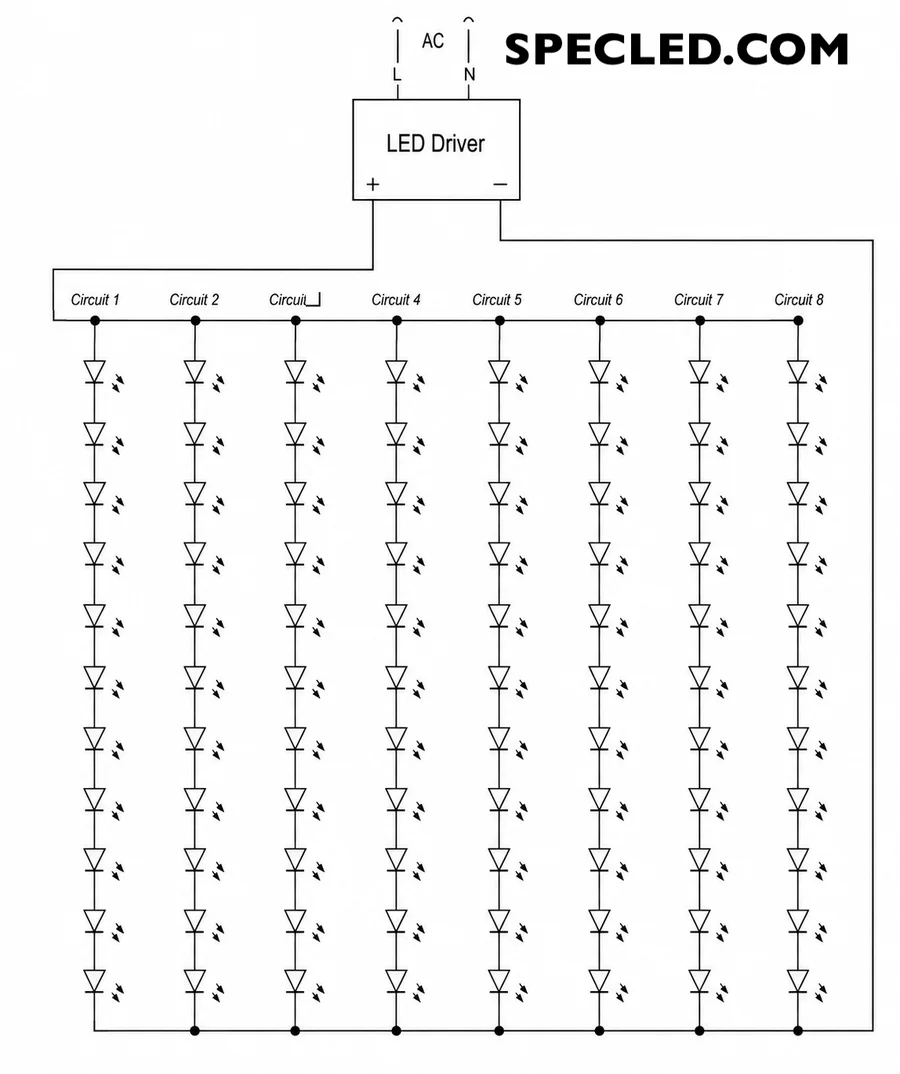
There is a large number of different connection types, for example: series-parallel or matrix; some connection methods are even patented.
LED Cooling - A Crucial Factor for Reliable Device Operation
Choosing the right driver is only half the battle when building your own LED fixture. The second, equally important task is efficient heat dissipation from the LEDs. High-power LEDs convert only a fraction of their consumed energy into light; a significant portion goes directly into heating the diode die. If this heat is not dissipated using a high-quality aluminum profile (heatsink), the lifespan of the semiconductors will drop rapidly, and their light output will decrease due to thermal degradation. To avoid overheating and guessing the profile size, be sure to use our led heatsink calculation and thermal area tool↗. It will help you accurately determine the required heat dissipation area based on the total power of your circuit.
Additionally, keep in mind that temperature directly affects the electrical parameters of the system. Under heavy heating, the forward voltage drop (Vf) across the die slightly decreases. If the thermal conditions are not stabilized by a heatsink of the correct size, the circuit's characteristics will begin to drift. Properly calculated cooling will not only protect your LEDs from degradation but also ensure stable operating conditions where your driver calculator estimations match reality 100%.