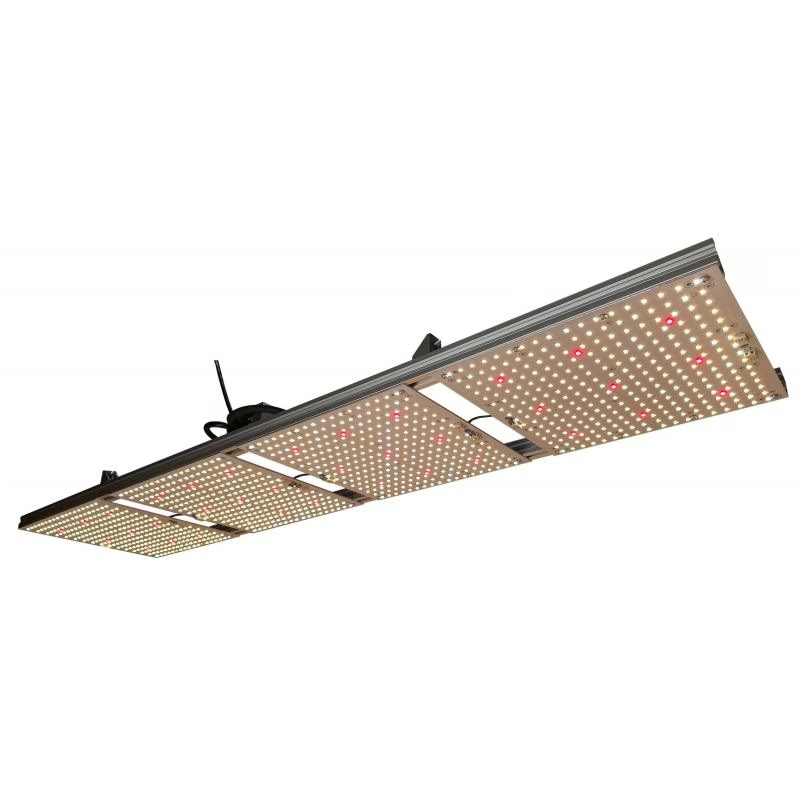
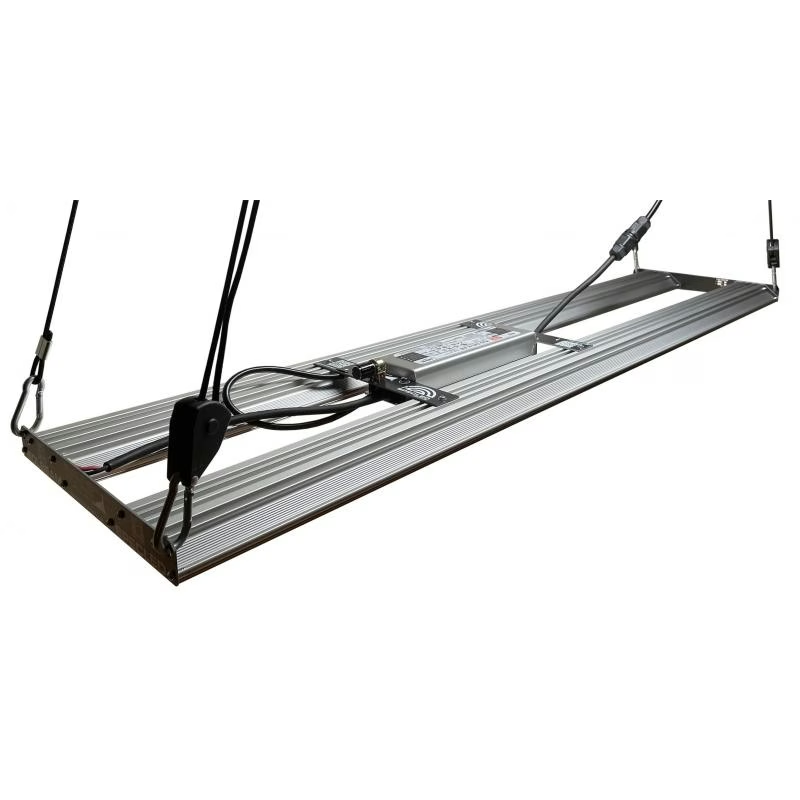
SPECLED Sol Beam 240W LED Grow Light
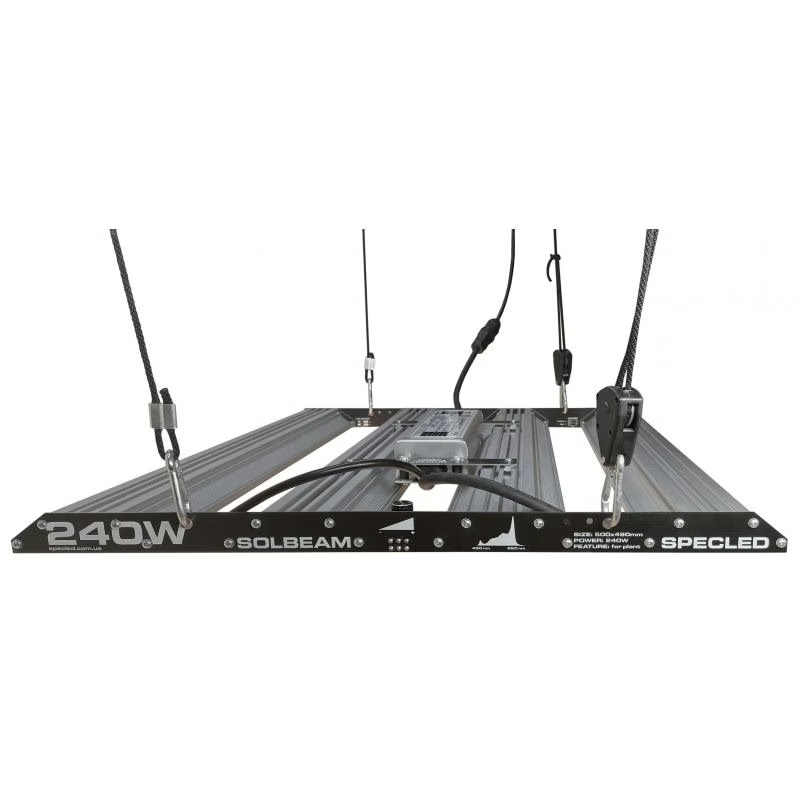
Specifications
| Led grow lamp power: | 240W |
| Input voltage range: | 100V - 305V AC, 142V - 431V DC |
| Installed LEDs: | Seoul Semiconductor, Osram Osconiq 660nm |
| Light temperature: | 3600K |
| Color rendering index - CRI: | 96 Ra |
| Viewing angle: | 120° |
| Dimming: | Built-in 100kOhm potentiometer |
| Length: | 503mm (19.8") |
| Width: | 490mm (19.3") |
| Height: | 55mm (2.16") |
| Weight: | 3.65kg |
Full Description
Features of the Sol Beam 240W LED grow light
The "Sol Beam 240W" LED grow light for plants is built on Sol Beam V3 LED modules (third generation). High-efficiency white Seoul Semiconductor 3500K + 5000K LEDs and 660 nm Osram OSCONIQ P3737 (GH PUSRA2.25) LEDs, with a rated output of 6 µmol/s, deliver maximum lamp efficiency.
The grow light has a square form factor and is ideal for grow tents sized:
- 50×60 cm (0.3 m²);
- 60×60 cm (0.36 m²);
- 70×70 cm (0.49 m²);
- 80×80 cm (0.64 m²).
The effectively lit area ranges from 0.3 to 0.65 m² in a square shape. The grow light has a full spectrum, suitable for all types of light-loving plants and for the complete growth cycle.
Cooling is passive, provided by massive aluminum profiles with protective clear acrylic inserts.
Brightness is adjustable from 10–100% via a built-in dimmer (100 kΩ potentiometer).
The video review below shows the lamp with Sol Beam V1 modules (first generation), which used 660 nm Samsung LH351 V2 LEDs — less efficient than the modern Osram OSCONIQ. The video review will be updated when possible.
Powerful SOLBEAM 240W LED grow light with an increased 660nm peak
Additional Information
Who the Sol Beam 240W LED grow light is for
The Sol Beam 240W LED grow light is built for growers who care about results, not marketing watts with nominal micromoles-per-watt from datasheets. Its square shape produces an even light footprint with no dark corners — exactly what elongated fixtures lack in 60×60 and 80×80 cm tents. The lamp delivers a full spectrum reinforced with a 660 nm peak and stays effective for the plant through every growth phase: from seedling and vegetation to flowering and fruiting.
Why the spectrum matters
White Seoul Semiconductor LEDs provide a balanced base with a high color rendering index, while the reinforced 660 nm peak on Osram OSCONIQ diodes drives the flowering response and inflorescence density. Plants use red 660 nm light most efficiently for photosynthesis, so boosting that peak specifically noticeably raises output compared to "just white" panels.
Passive cooling — silence and reliability
Massive aluminum heatsinks dissipate heat without a single fan. That means zero noise in a living space, no moving parts to wear out, and protection from the dust that fans pull into the heatsink. Clear acrylic inserts cover the LEDs, protecting them from splashes and dust.
Flexibility for your tent
The built-in 10–100% dimmer lets you lower the intensity for young plants and bring the lamp to full power at peak flowering. A single lamp covers an area from 0.3 to 0.65 m² — you set the hanging height and brightness to match the specific crop, whether greens, tomatoes, strawberries, or light-loving medical tomatoes.
The Sol Beam 240W is a tool for those who measure light with a spectrophotometer, not with a glossy marketing brochure.
Frequently Asked Questions
The effective coverage area directly depends on the type of crop you are growing. For light-loving plants, the effective illumination area is calculated using the formula of 400–600W per 1 m², depending on the growing conditions and desired results. A standard 240W grow light can effectively illuminate up to 0.75 m², but for ideal results in an area of 0.7 to 1.2 m², we recommend installing two lamps.
Use the above recommendations for the SPECLED Sol Beam 240W LED Grow Light model while considering the crops you plan to grow. There is no single definitive answer in horticultural lighting: with supplemental CO2, light intensity can be increased up to 1000W per 1 m², provided that microclimate parameters are strictly maintained.
At the same time, for less demanding crops (greens, lettuce, microgreens), the effective coverage area can be doubled and is limited only by the physical dimensions of the LED grow light.
We recommend combining several of these lamps to create an even rectangular or square lighting footprint without shadows.
Like all the lamps we build, the SPECLED Sol Beam 240W LED Grow Light features excellent passive heat dissipation. During operation, the fixture gets warm but does not overheat. Additional cooling fans directed at the grow light itself are not required. However, we strongly recommend using inline duct fans and clip-on fans inside the grow tent to ensure proper air circulation and mixing around the plants, which helps prevent mold formation. You can read more about air circulation and temperature control in a grow tent in our article "Why Air Circulation Fans Are Essential" ↗.
There is no single figure in centimetres here — it depends on the power of the specific model and the dimensions of your tent. What matters is not the mounting height itself, but the light intensity the plant receives at the canopy (PPFD, µmol/m²·s). Hanging height and dimmer position are simply the two tools you use to bring the light to the level required for the current growth stage.
Target PPFD values by growth stage:
- Germination, seedlings, clones: 100–300 µmol/m²·s. Excess light harms young plants — at this stage the lamp is hung higher and dimmed down.
- Vegetative growth: 300–600 µmol/m²·s. Lower the light and add power to build dense green mass.
- Flowering and fruiting: 600–900 µmol/m²·s. Peak output. Values above 900 only make sense with CO₂ supplementation — without it the plant cannot use the extra light anyway, and you simply risk light stress.
How to set these values in practice:
The accurate method is to measure PPFD with a quantum meter (or a lux meter converted using the coefficient for your spectrum) right at canopy level, then adjust height and power to land within the range for the stage. If you have no meter, start with a greater height and medium power, then gradually bring the lamp closer and raise the dimmer while observing the plant over several days. For more on what PPF and PPFD mean↗, see the dedicated article.
The plants themselves are your main indicator. Signs of excess light: paling or yellowing of the upper leaves, edges curling into a "canoe" shape, bleaching of the canopy directly under the centre of the lamp. Signs of insufficient light: stretching of stems and internodes, thin "leggy" shoots, leaning toward the light source. If you see stress, raise the lamp and/or reduce power; if you see stretching, lower it or increase brightness.
The dimmer on SPECLED Sol Beam 240W LED Grow Light lets you move smoothly through every stage with a single lamp, without rehanging it each time: adjust the light with power more often, and change the height as the plants grow, keeping the target PPFD at the canopy.
Whether you are planning to buy an LED grow light or already own one and want to check how efficiently and uniformly it illuminates your grow tent, you can use our 3D lighting simulator. Based entirely on your custom parameters, our 3D simulator will generate a fairly accurate lighting calculation and map out the light distribution↗ for your grow space.
A standard lux meter measures light based on human eye sensitivity, whereas PPFD measures the actual photons driving photosynthesis. Because of this difference, there is no single universal formula. To get the PPFD value, you must multiply your lux reading by a specific conversion factor that depends entirely on your light source's spectrum (e.g., HPS, Sunlight, or specific LED color temperatures). To get an accurate estimate in seconds without searching for multipliers, use our Lux to PAR conversion↗ tool. Just select your light type or adjust the spectrum manually, enter your lux reading, and the widget will do the math for you.
Customer Reviews
0No reviews yet. Be the first!
Only registered users can leave reviews.
Login to Write