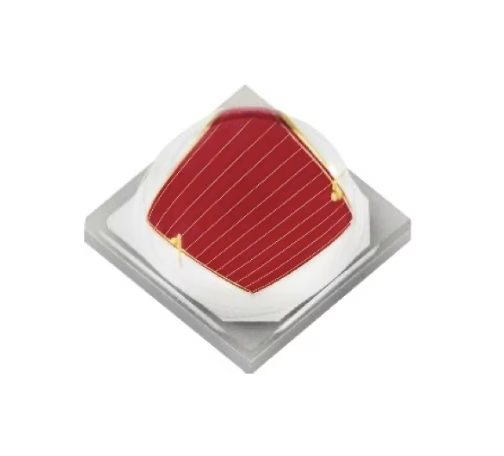
In the world of professional horticulture lighting, red LEDs with a wavelength of 660 nm (Deep Red) play a fundamental role, as this spectrum exactly matches the absorption peak of chlorophyll A, which is responsible for photosynthesis and plant biomass growth. 660 nm is the best turbo booster for plant growth. 660 nm LEDs are always included in grow lights. Today, I will break down in detail the new release from Seoul Semiconductor — the SZDR5A0G model (product code: S1CH-3535660002-00000000-00001).
This chip demonstrates an excellent leap in efficiency and offers engineers a new level of convenience when designing fixtures. The declared specifications are very good!
Key Specifications of the SZDR5A0G (S1CH-3535660002-00000000-00001)
First, let's look at the dry numbers from the official documentation:
- Manufacturer: Seoul Semiconductor.
- Model: SZDR5A0G (S1CH-3535660002-00000000-00001).
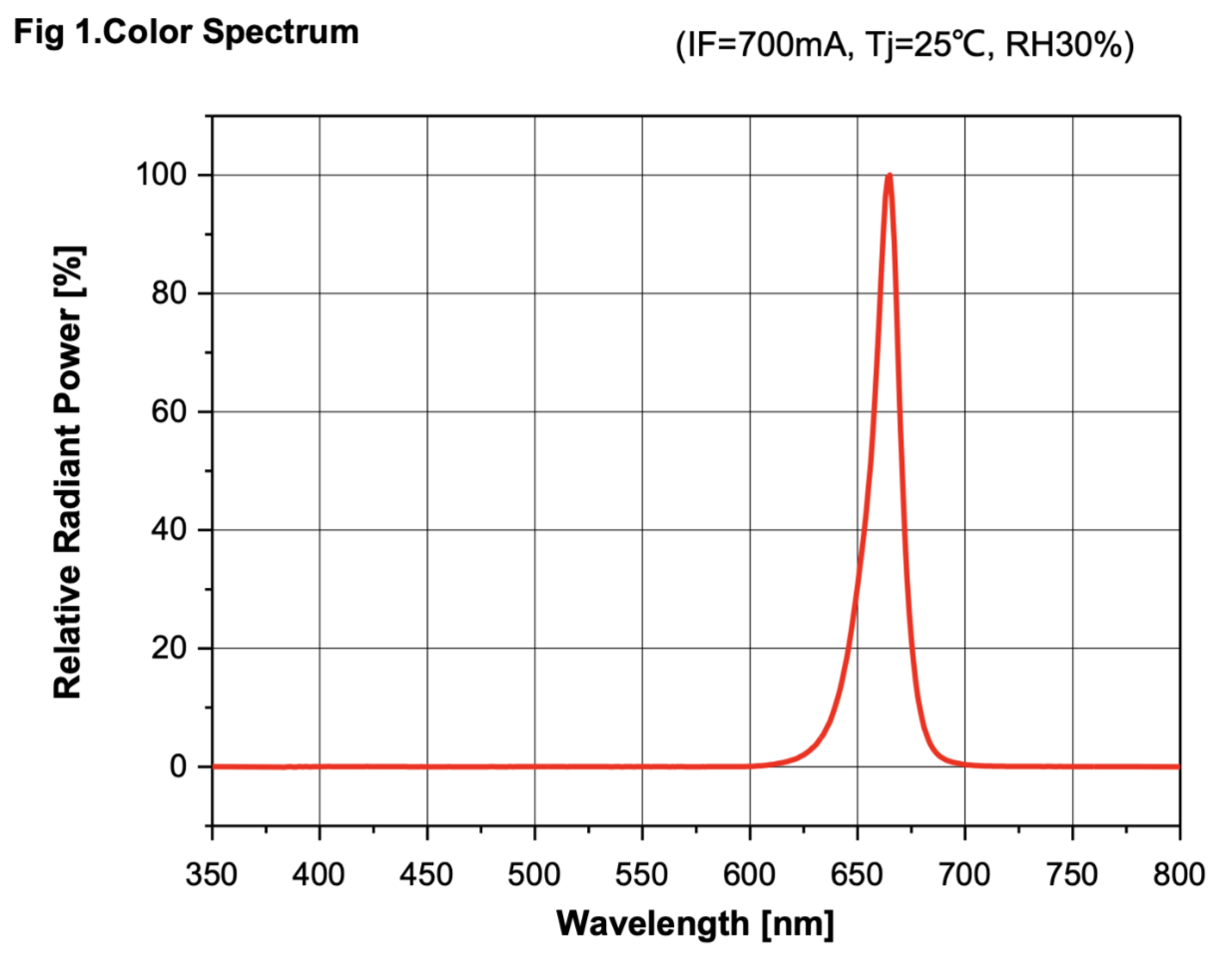
- Wavelength: Ranges from 655 to 670 nm. The typical value is 666 nm.
- Package: Built in a standard 3535 ceramic package (3.5 × 3.5 mm).
- Maximum Current: According to the specs, the absolute maximum forward current reaches 1400 mA.
- Nominal Current: Baseline characteristic measurements are provided for 350 mA and 700 mA currents.
- Viewing Angle: The typical view angle is 127°.
- Thermal Resistance: The thermal resistance from junction to solder point (RθJ-s) is only 1.2 K/W. This is an excellent metric, performing even better than the expected 3.5 °C/W.
Performance and the Magic of "Underdriving"
Let's look at the performance metrics at a junction temperature of 25 °C. At this point, keep in mind that Osram provides values at a junction temperature of 85 °C, which corresponds to real operating conditions.
At 700 mA current:
- Typical Radiant Power reaches 1075 mW.
- Photosynthetic Photon Flux (PPF) is 5.93 μmol/s.
- Photosynthetic Photon Efficacy (PPE) holds at 4.30 μmol/J.
At 350 mA current:
- Radiant Power is 537 mW.
- Photon Flux is 2.96 μmol/s.
- Efficacy (PPE) rises to 4.72 μmol/J.
A crucial physical factor stands out here: when reducing the current from 700 mA to 350 mA, the efficiency (PPE) increases from 4.30 to 4.72 μmol/J. This is roughly a 10% gain. This physical characteristic confirms the golden rule of LED lighting: it is much more profitable to underdrive LEDs. Yes, you will need to install more LED modules in the lamp, but if your ultimate goal is maximum efficiency (μmol/J) and minimum heat, this path fully justifies itself.
Binning and Comparison with the Previous Generation
Power sorting for the SZDR5A0G includes three main bins when tested at 700 mA:
- Bin M11: Radiant Power from 1000 to 1050 mW. Photon Flux (PPF) from 5.51 to 5.79 μmol/s.
- Bin M12: Radiant Power from 1050 to 1100 mW. Photon Flux (PPF) from 5.79 to 6.06 μmol/s.
- Bin M21: Radiant Power from 1100 to 1150 mW. Photon Flux (PPF) from 6.06 to 6.34 μmol/s.
Forward Voltage (Vf) is also strictly sorted:
- C1: from 1.87 to 1.97 V.
- C2: from 1.97 to 2.07 V.
- D1: from 2.07 to 2.17 V.
Comparing the new release with the previous generation (SZDR5A0D) reveals another step of evolution. Previously, Seoul claimed around 500 mW and 2.73 μmol/s at 350 mA (which was 5% better than the SZDR5A0C model). The new SZDR5A0G model outputs 537 mW and 2.96 μmol/s at the same current — that's already a +7% increase from the old SZDR5A0D model!!!
Clash of the Titans: Seoul SZDR5A0G vs Osram Osconiq GH PUBRA1.25 (G3)
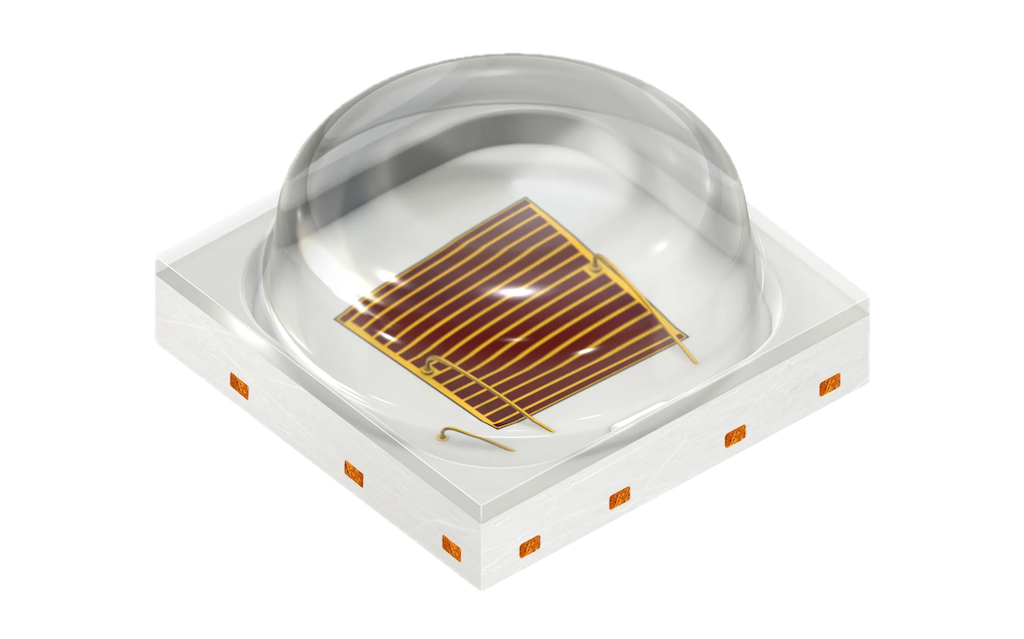
To understand the new chip's real place in the market, it is logical to compare it with one of the market leaders — the German Osram Osconiq GH PUBRA1.25 (G3) chip. We've also created a spectrum simulator for OSRAM's Osconiq P3737 LEDs for plants↗. You can use it to simulate the spectrum and build your own LED module.
Both diodes are designed to operate at 700 mA. Let's look at the dry numbers (OSRAM provides data for an 85 °C junction temperature):
- Radiant Flux: Seoul's typical value is 1075 mW. Osram's is 1045 mW.
- Photon Flux (PPF): Seoul outputs 5.93 μmol/s. Osram trails slightly at 5.84 μmol/s.
- Efficacy (PPE): Seoul's metric is 4.30 μmol/J. Osram's is 4.54 μmol/J.
Why is Seoul's efficiency in μmol/J slightly lower despite a higher PPF?
The answer lies in the forward voltage (Vf) and testing methodology. Osram's typical voltage is 1.84 V, whereas Seoul's is 1.95 V. Due to the higher voltage, the Seoul chip consumes slightly more electrical power (in Watts) at the same current, which mathematically lowers the PPE metric (Photons divided by Joules consumed).
Additionally, it is crucial to note the testing conditions: Osram's datasheet provides data for a "hot" junction at 85 °C, while Seoul SZDR5A0G's baseline specs are listed for ideal laboratory conditions (Tj = 25 °C).
| Parameter | Seoul SZDR5A0G | Osram GH PUBRA1.25 (G3) | Difference (Seoul vs Osram) |
|---|---|---|---|
| Radiant Flux | 1075 mW | 1045 mW | +2.9% |
| Photon Flux (PPF) | 5.93 μmol/s | 5.84 μmol/s | +1.5% |
| Efficacy (PPE) | 4.30 μmol/J | 4.54 μmol/J | -5.3% |
| Typical Forward Voltage (Vf) | 1.95 V | 1.84 V | -6.0% (worse) |
| Thermal Resistance (Real Physical) | 1.2 K/W | ~2.11 K/W* | +43.1% (Seoul dissipates heat better) |
| Testing Temperature (Tj) | 25 °C | 85 °C | Direct comparison is inaccurate |
| Wall-Plug Efficiency | 78.8% | 81.1% | -2.8% |
* Important note on thermal resistance: Osram's official specification cleverly lists "electrical" thermal resistance (0.40 K/W elec.), which does not account for the energy emitted as light. For an objective physical comparison with the Seoul chip (1.2 K/W), Osram's metric was recalculated into real thermal resistance using the formula Rth = 0.40 / (1 - 0.811), resulting in ~2.11 K/W. Thus, Seoul's ceramic package handles heat dissipation significantly more effectively.
The difference in testing temperature (25 °C for Seoul vs a "hot" 85 °C for Osram) plays a key role. In real working conditions (when heated), the Seoul chip's specs will inevitably drop slightly, which might make Osram's actual lead in efficiency (PPE) even more noticeable than the stated -5.3%.
Summary
The new Seoul Semiconductor SZDR5A0G 660nm LED is a high-quality and excellent tool for creating professional plant lighting. Thanks to its high radiant power, it poses serious competition to European counterparts.
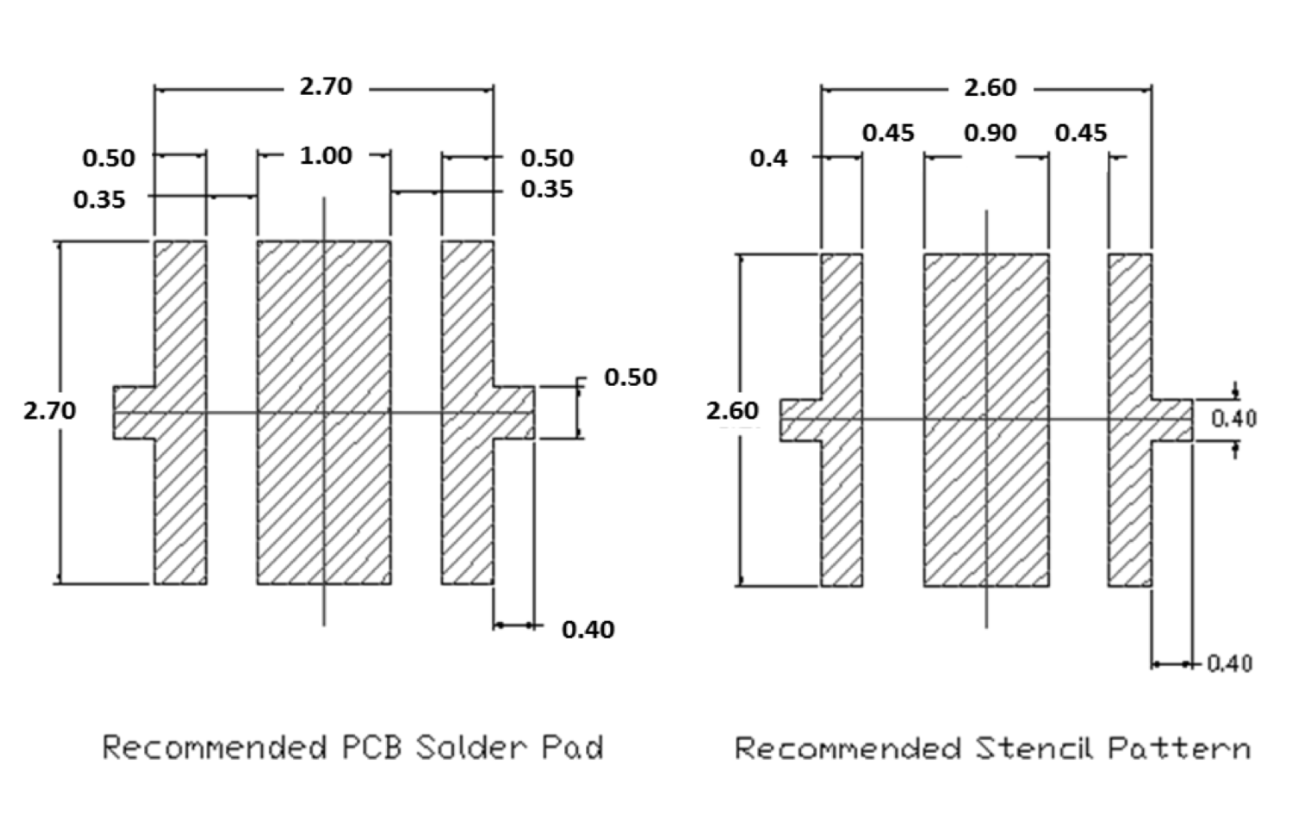
The solder pad layout of the SZDR5A0G remains unchanged, just like the SZDR5A0C/SZDR5A0D series, which is important: you can install the new chips on older-style aluminum boards. Transitioning to the new model requires no additional costs.
Paradoxically, the Seoul Semiconductor SZDR5A0G 660nm is not available for open retail purchase; the technical documentation was published in February 2025 on the official website. The price is currently not publicly known. Given its declared specs, the LED offers excellent competition; perhaps the company cannot reach a retail price lower than OSRAM OSCONIQ, or they are exclusively working with large manufacturers of LED grow lights.
The final conclusion always rests with the buyer; I have merely structured the data from the PDF and shared my perspective. I have been a huge fan of Seoul Semiconductor LEDs for many years (over 6 years). They might not make the "brightest" LEDs in the world, but they definitely produce very high-quality chips at a great price. That is exactly why I decided to review this new 660nm LED.
As of this writing in 2026, Seoul Semiconductor is actively promoting its TRI-R technology, which is used in its SunLike series of LEDs for efficient horticultural lighting. SunLike LEDs feature a wide, linear spectrum and a CRI of 98. For more information on Seoul Semiconductor's SunLike LEDs for horticultural lighting↗, please see this article.