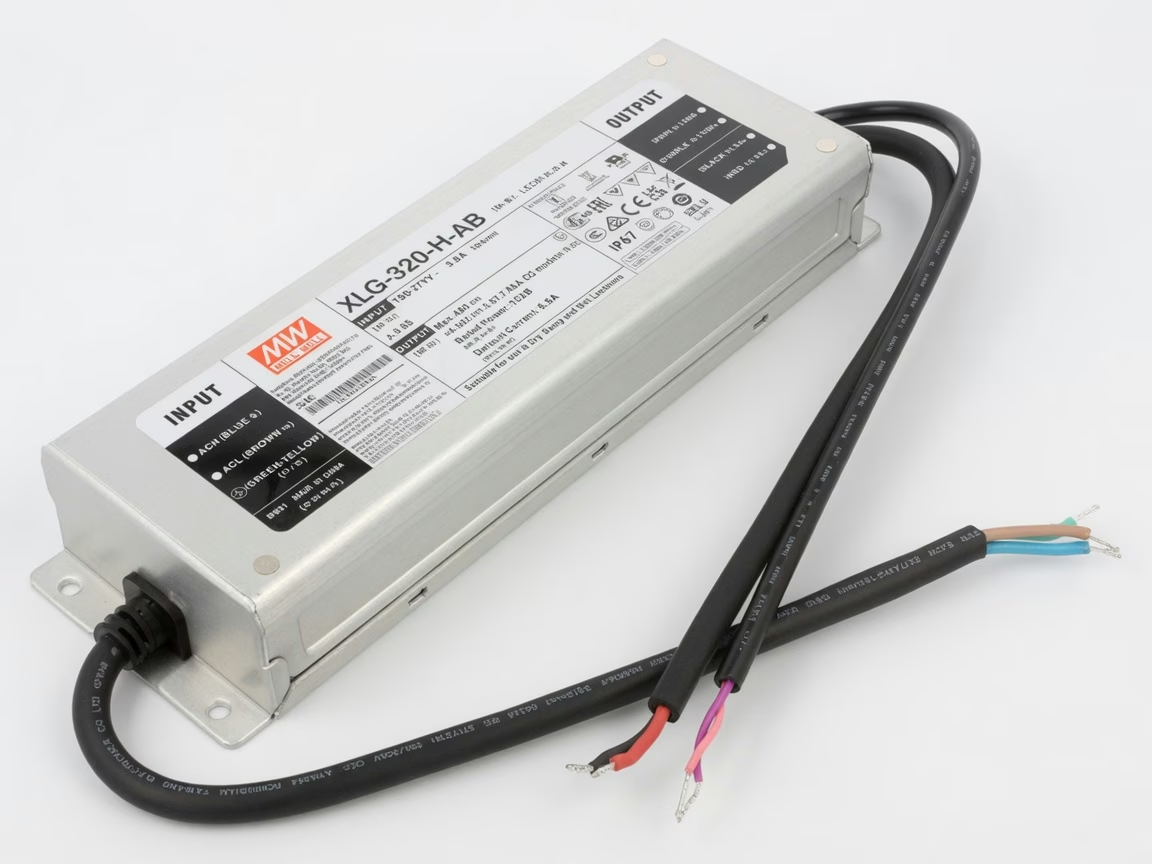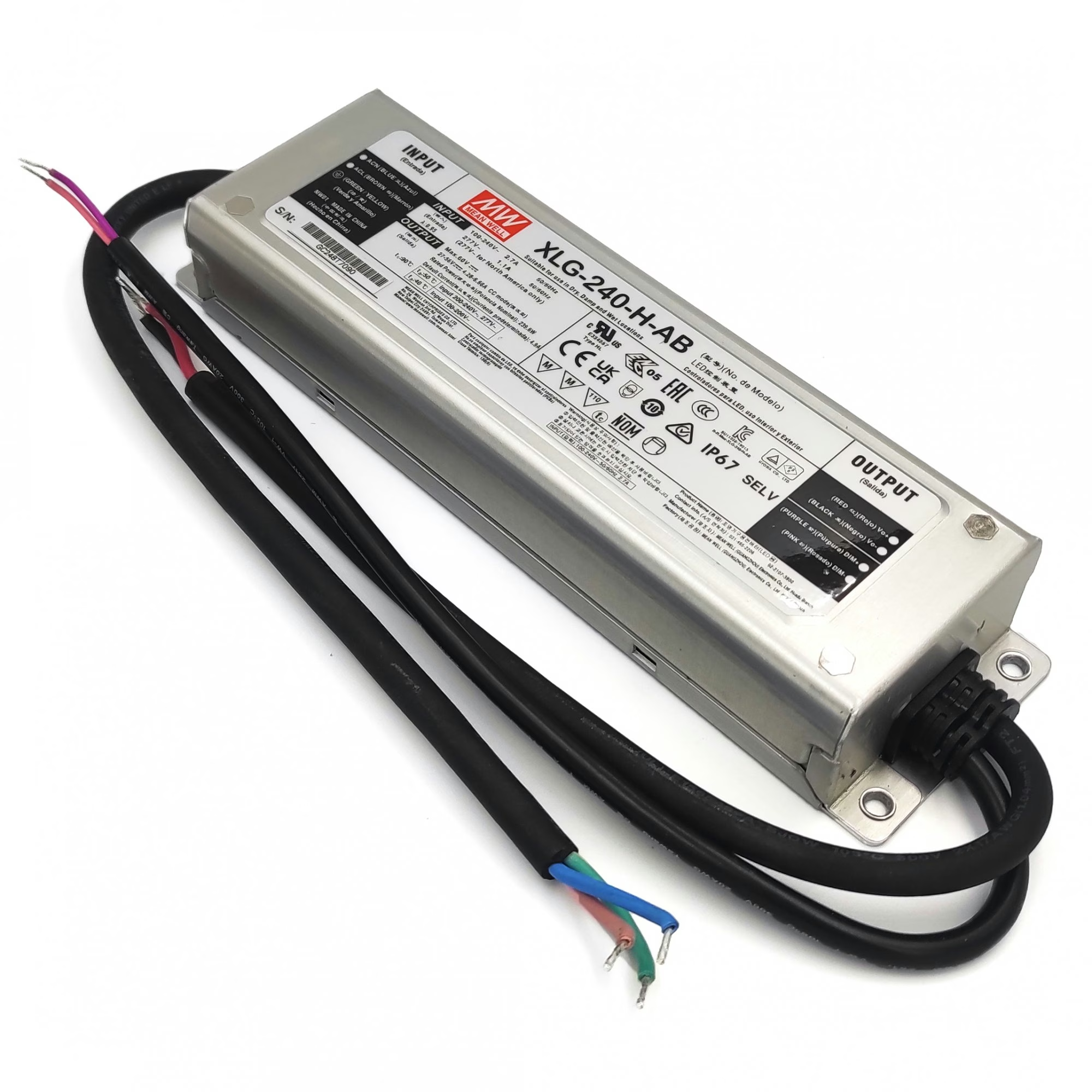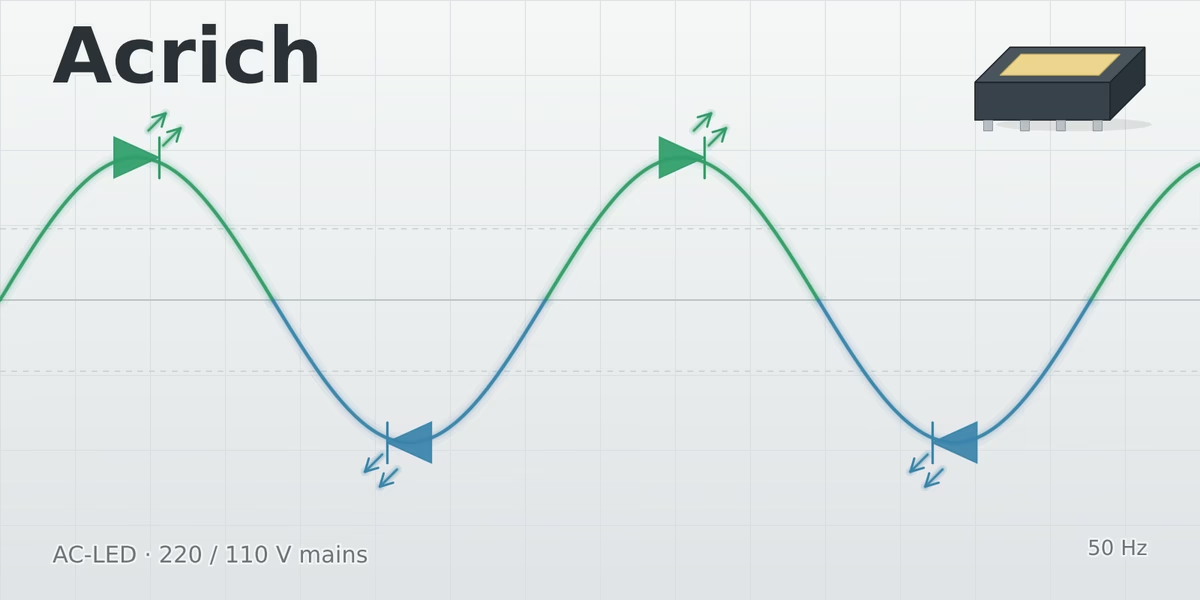
Acrich technology allows LEDs to operate directly from alternating current (AC) without the use of bulky and short-lived external drivers or AC/DC converters. The name is formed by merging the words "AC" (alternating current) and "rich". Acrich technology is a combination of three engineering solutions:
- High-voltage MJT (Multi Junction Technology) LEDs;
- AC DOB (Driver On Board);
- AC Direct.
Acrich — this technology was patented by the South Korean company Seoul Semiconductor.
Actually, the technology is quite simple and works as reliably as a shovel. In my article, I want to explain in detail why it's cool and why it's not used everywhere (or is it?). Let's figure it out!
- MJT (Multi Junction Technology) — a technology that allows creating multiple LED p-n junctions on a single chip. In fact, it is a ready-made LED matrix in miniature. Since the p-n junctions in an MJT LED are connected in series, the operating voltage of one such LED in a single SMD package can be tens of volts, for example, 22 volts or even 60 volts. At the same time, the higher the voltage, the lower the maximum current of such an LED.
- AC DOB (Driver On Board) — a technology that allows soldering the driver onto the same aluminum board with the LEDs. This makes the design cheaper, smaller in size, and greatly simplifies assembly.
- AC Direct (Direct AC Drive) — LED control technology that allows efficiently powering LEDs directly (Direct) from an AC voltage network of 220 or 110 volts.
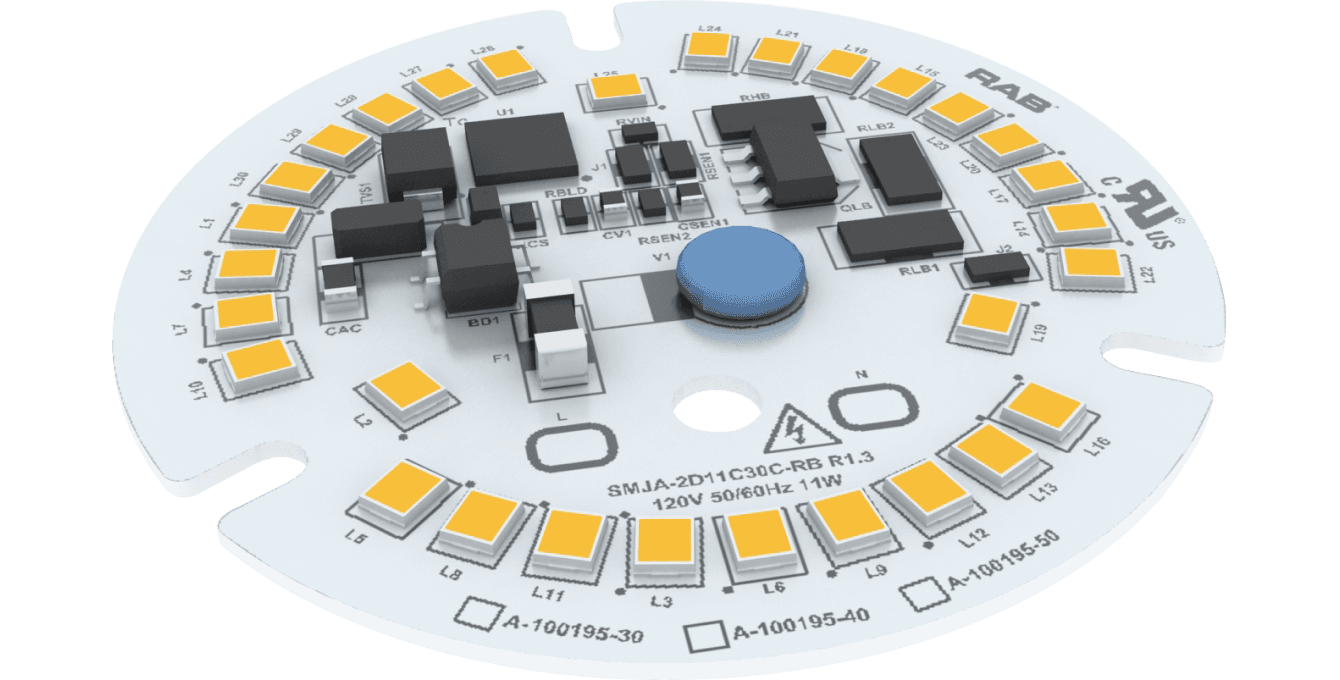
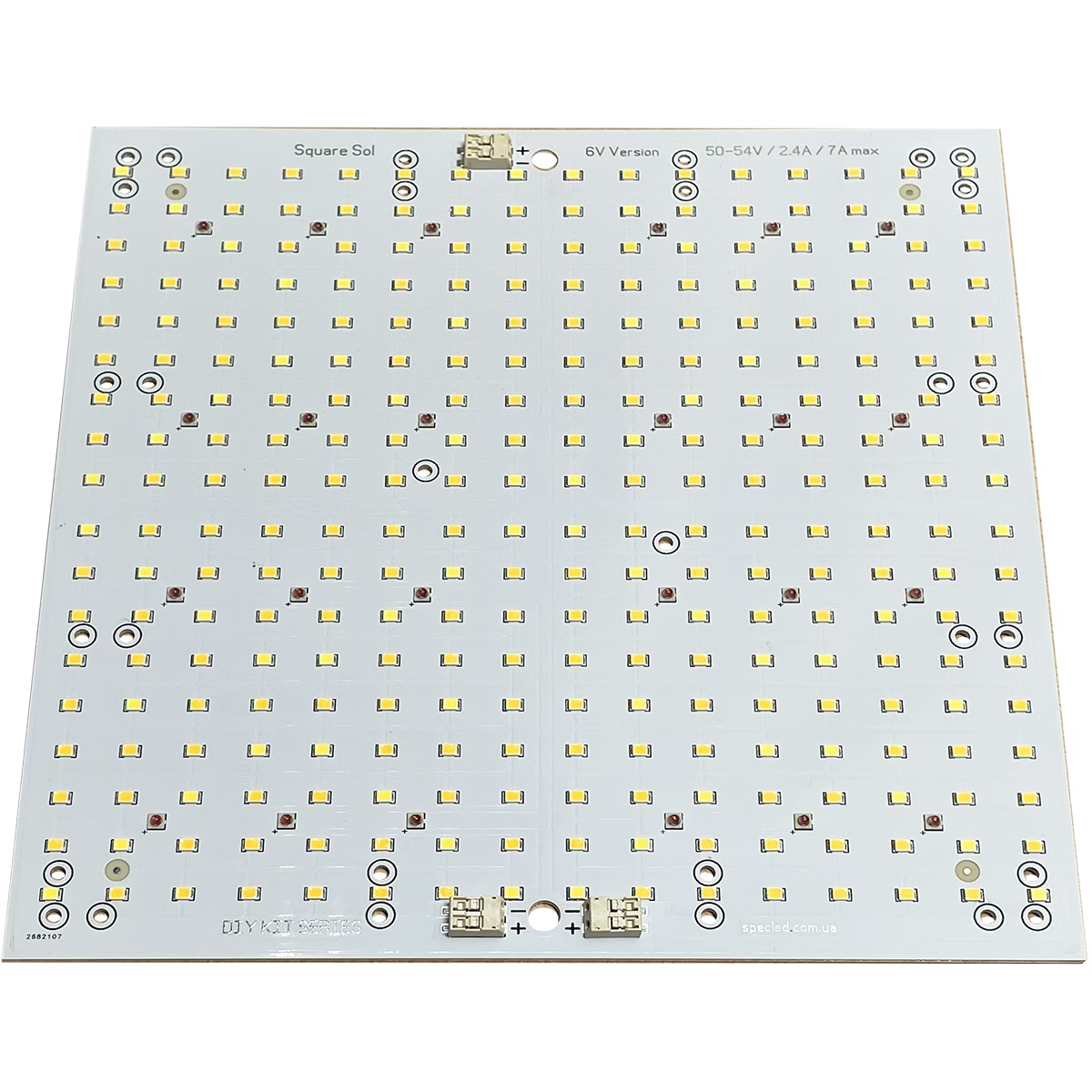
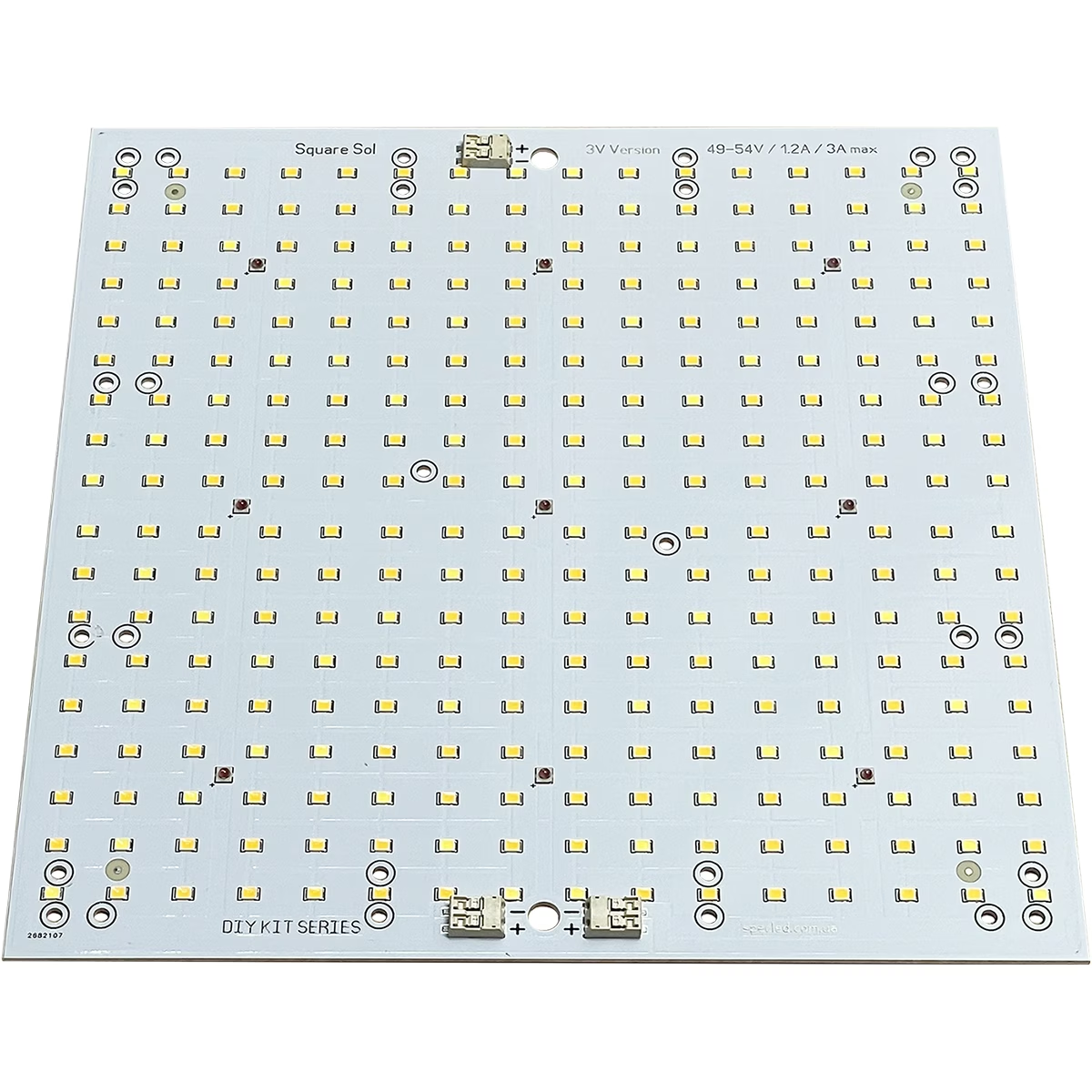
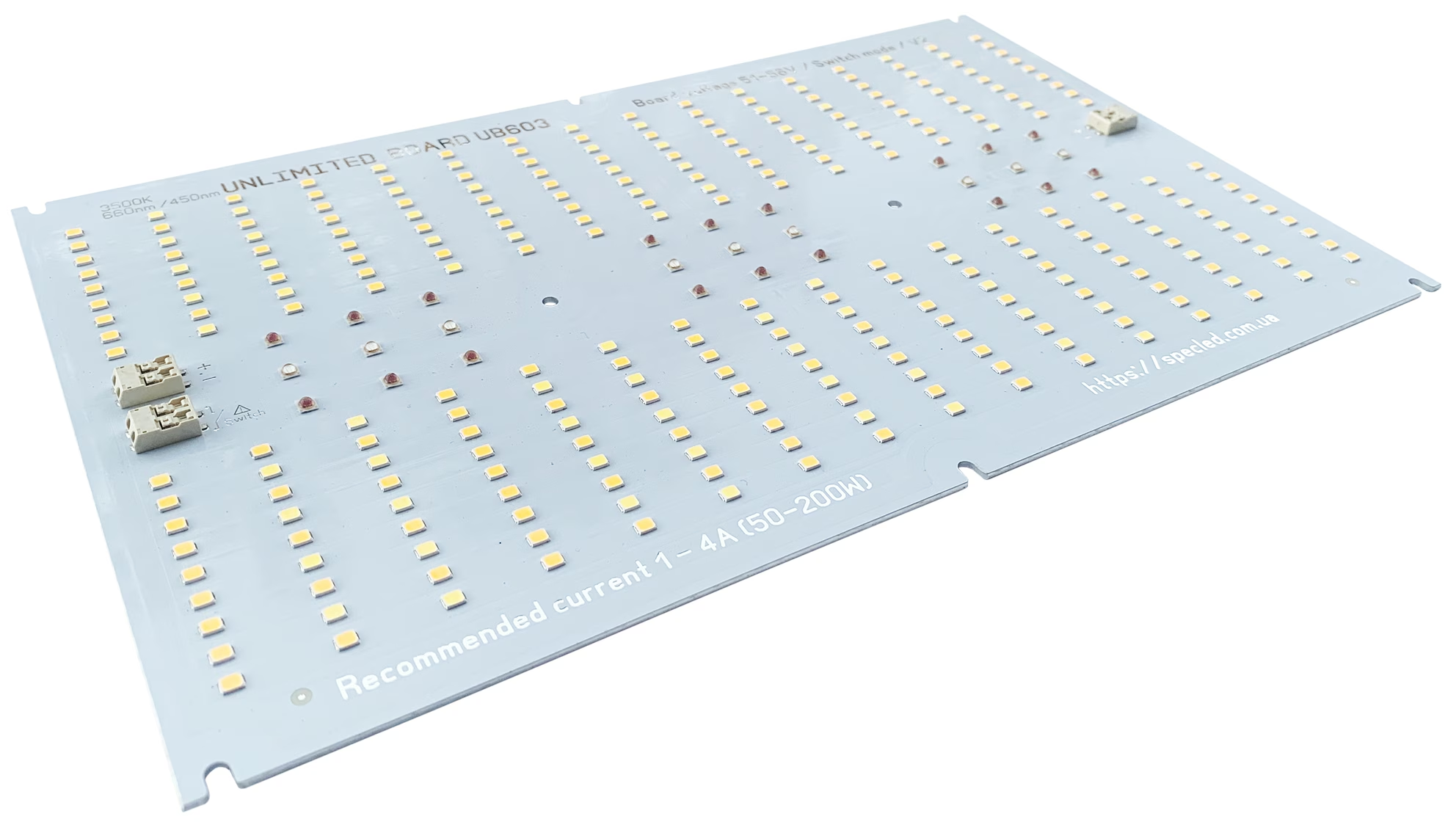
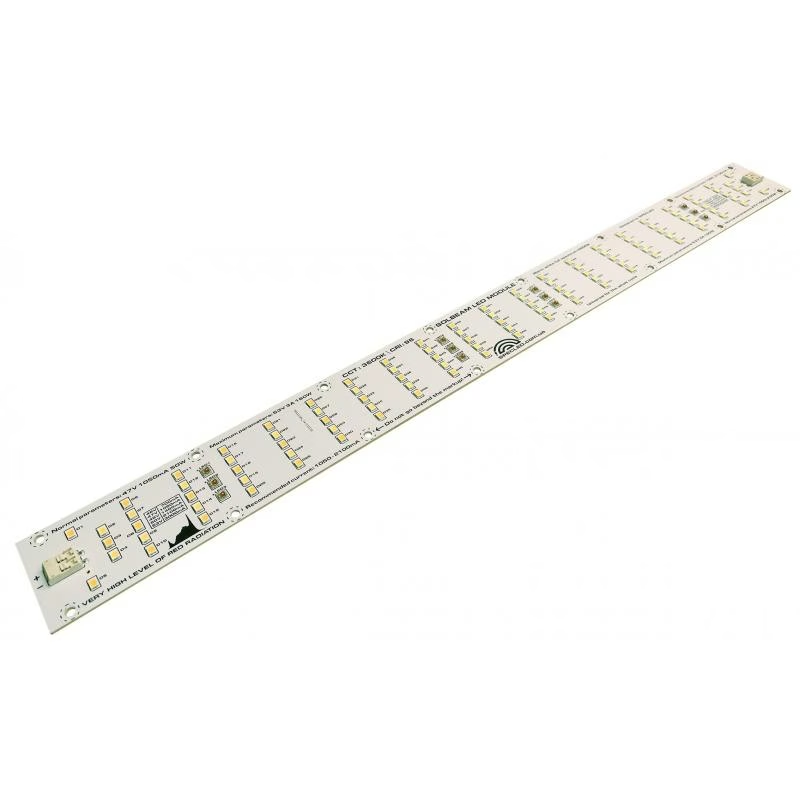
The photo shows a classic Acrich LED module with MJT LEDs and Driver On Board.
To understand the essence, you need to delve into history. I will try to bring you up to speed very briefly.
2006: Acrich Technology, 1st Generation
At this time, I had just finished high school and missed the most interesting part — two LED chains were placed on the crystal of a single LED (in one package), where the voltage drop on each was about 220 volts or slightly less. The chains were connected anti-parallel. Thus, one circuit turned on during the positive half-wave of the 220V AC network, and the second circuit turned on during the negative half-wave. That is, the circuits worked alternately with each other, and only one circuit worked at any given time.
When the sine wave crossed zero, the LED didn't work at all. And it didn't work until the half-wave reached the minimum opening value of one of the circuits. LEDs of this type even had to be connected to the network through a 2W resistor.
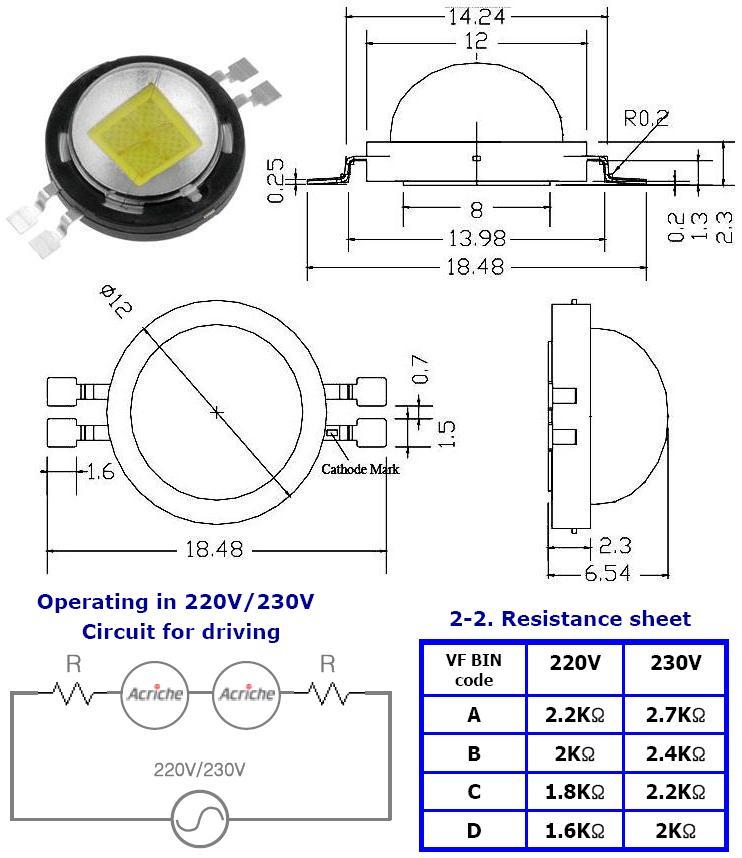
The performance of the presented LED at that time was about 50-60 lm/Watt. This was lower than classic solutions, but it allowed getting rid of the driver, simplifying the design, and making it more compact.
Disadvantages of the first generation Acrich:
- Low luminous efficacy;
- High level of heating;
- Very high level of light pulsation.
The disadvantages prevented the technology from becoming a breakthrough and widely capturing the market. But time went on, engineers didn't sleep, and 2011 arrived.
2011: Acrich Technology, 2nd Generation
A lot of work was obviously done. In the second generation, an IC Driver chip was applied for the first time, which switched the LEDs on in stages depending on the voltage at the moment. Also, a series of high-voltage MJT LEDs appeared. The new models of second-generation Acrich LED modules became competitive, luminous efficacy reached 80-100 lm/W, which was very good for 2011. Power Factor rose to 0.97. It even became possible to dim Acrich modules using classic TRIAC dimmers!
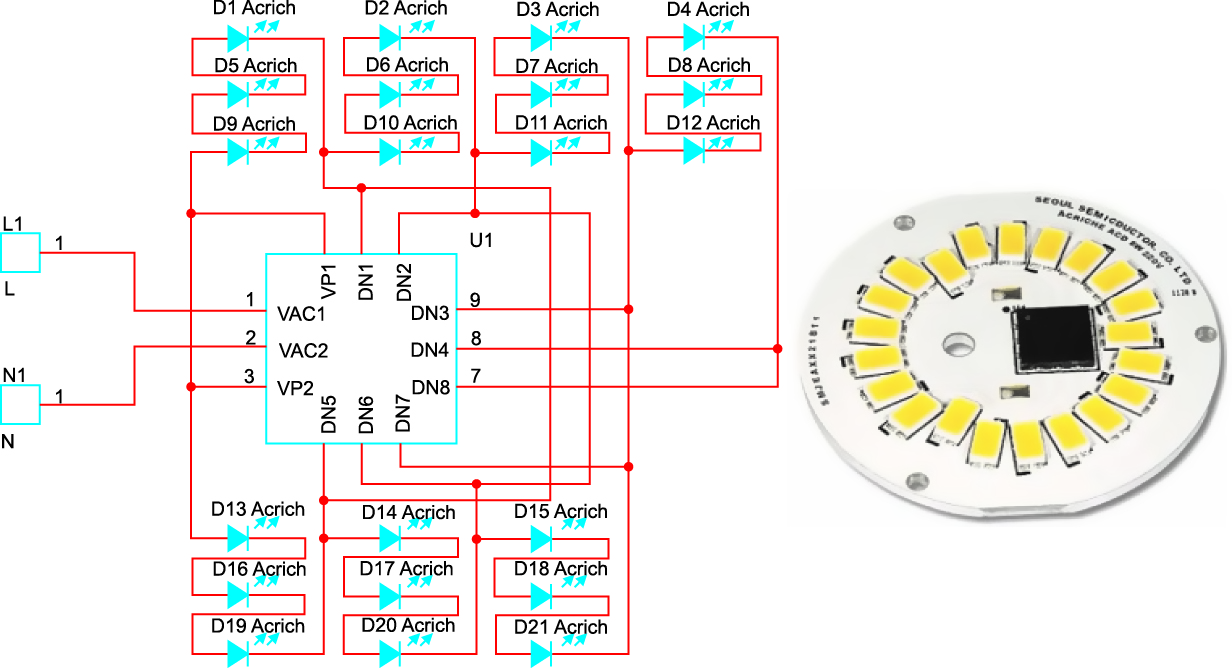
Simplified schematic of an LED module with AC DOB (Driver On Board) technology.
The main disadvantages remained:
- High level of heating;
- Very high level of pulsation.
2014: Acrich Technology, 3rd Generation
Time flies, technologies advance. Now Acrich 3 IC is not just an LED switcher chip, it is now also a smart controller to which you can connect motion sensors, wireless modules, and so on. Smoother dimming. Luminous efficacy reached 100-140 lm/W.
The main disadvantages are still with us:
- High level of heating;
- Very high level of pulsation.
The Koreans from Seoul Semiconductor are well aware of these problems. In the latest generations (Acrich3), they added the ability to connect external film capacitors or active ripple smoothing circuits (Valley-fill circuits). This actually reduces flicker from a nightmarish 100% to an acceptable 15-20%.
But here a philosophical paradox arises: as soon as you start covering the Acrich board with additional capacitors, suppressors to protect against voltage surges, and electromagnetic interference (EMI) filters, your board grows parts again. It loses its main advantage — extreme simplicity and compactness. It turns into the very driver you were trying to escape from, only smeared like Nutella over the surface of the LED module.
2016: Acrich Technology, 4th Generation?
Transition to WICOP LEDs. Wafer Level Integrated Chip on PCB (crystals integrated right onto the aluminum board) — hello, Chinese friends with their $2 boards. Unexpected, right? In reality, Acrich 4th generation doesn't exist; the last generation is the third. Further on, Seoul Semiconductor went a different way and released the MicroDriver. This is because more stringent requirements for light pulsations appeared. MicroDriver is a separate topic.
As a result, the original technology died, giving birth to what everyone loves so much, what I call "space heaters" (or irons) — LED matrices for plants or for general lighting with a catastrophic level of flicker, a ridiculous luminous efficacy at the level of 100 lm/Watt or lower. But the price defeated all the disadvantages: 45W of heat and 5W of light, but for only $2. In China, there is a huge multitude of LED modules built on special microcircuits for powering LEDs directly from the 220-volt network. Modules for completely different applications with WICOP LEDs or classic SMD 3528, 3030. But they all have low efficiency and a critical level of pulsations. The technology was reborn into something unusable.
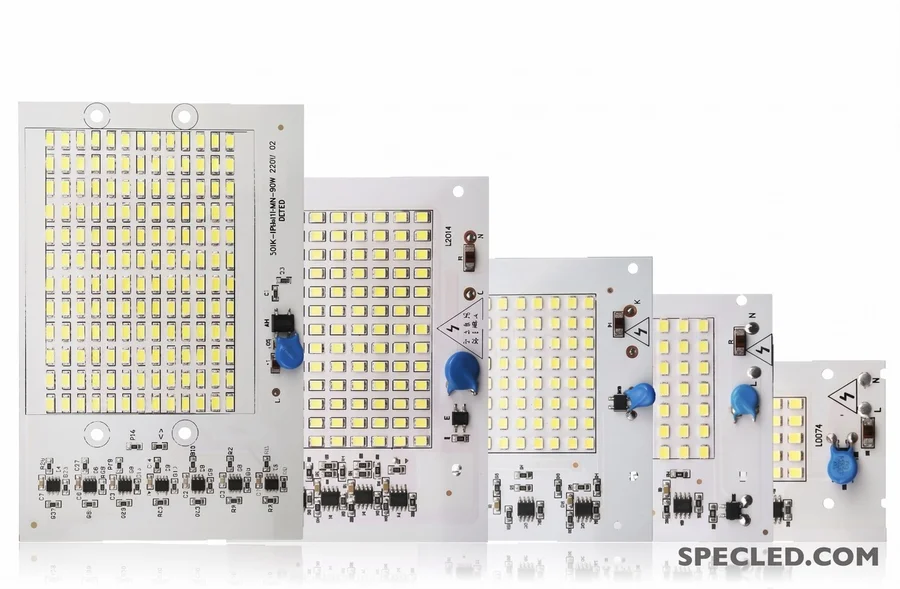
I want to note that Chinese solutions have very poor quality and low luminous efficacy not because they use Acrich technology, but because they are made that way for the sake of minimal cost.
Advantages of Acrich Technology
Let's now summarize all the good things about Acrich technology:
- No electrolytic capacitors, which don't really like high temperatures. The main enemy of reliability in any classic driver is electrolytic capacitors. Inside them is a liquid electrolyte, which banally dries up under the influence of operating temperatures (and it's always hot inside a luminaire). As soon as the electrolyte dries up, the capacitor loses capacity, its equivalent series resistance (ESR) increases, and the driver fails. The lamp starts blinking or just goes out. Acrich technology completely eliminates electrolytic capacitors from the circuit.
- The DOB (Driver-on-Board) concept. Seoul Semiconductor integrated the control chip right onto the same aluminum printed circuit board (MCPCB) where the LEDs themselves are soldered. There is no longer a need to place a large driver inside the housing or somewhere nearby; luminaire assembly is greatly simplified. An LED lamp can become as flat as a pancake.
- Bill of Materials (BOM) cost reduction. From a luminaire manufacturing perspective, Acrich is a holiday for the CFO. Instead of buying a board, LEDs, a separate driver, wires, connectors, and paying an assembler to connect them, the factory buys a single module. Screw the board to the heatsink, run two wires from the 220V network (L and N) — and the device is ready. Soldering custom-designed modules is no more difficult than soldering a regular LED module.
- High Power Factor. Acrich chips work on the principle of step switching. They slice the LEDs into groups (strings) and connect them one by one as the voltage in the AC sine wave increases. Because of this, the current consumption practically repeats the shape of the mains voltage. The Power Factor (PF) easily reaches values of 0.95–0.99 without the use of complex active correctors (APFC). For industrial facilities where power companies penalize for low PF (or force the installation of a special compensation cabinet), this is a huge plus.
Disadvantages and Critical Problems of Acrich
It turns out that Acrich technology made it possible to create simple, cheap, reliable LED lamps for completely different purposes. Cool? Let's look at all the existing disadvantages:
- High pulsation coefficient — since the LEDs are powered directly from alternating current, they go out when the voltage sine wave crosses zero 100 times per second (120 times for a 60Hz network). Acrich modules have a light pulsation of up to 30–40% (while good DC drivers output less than 1%). Because of this, such LED modules strictly cannot be used in living rooms, schools, and offices, as flickering causes severe eye fatigue and headaches. Their application is limited to the street, warehouses, and utilities.
- Increased mutual heating (Thermal stress) — the linear driver IC and the LEDs are soldered onto the same aluminum board (DOB) close to each other. The linear driver quenches excess mains voltage, converting it into heat. As a result, the LEDs heat the chip, and the chip additionally heats the LEDs. The problem is solved by an efficient heatsink. The area and geometric size of a heatsink for cooling LED modules can be calculated using our finned heatsink area calculator↗.
- Sensitivity to unstable networks and voltage surges — a classic power supply has built-in protection and a wide operating range (for example, from 100 to 240 V), within which the light burns equally bright. Acrich luminaires linearly depend on the voltage in the outlet. If the mains voltage drops to 180 V, the brightness of the luminaire drops as well.
- Reduced overall energy efficiency (Lm/W) of the system — Acrich drivers operate on the principle of linear regulation: they literally "burn" excess voltage, converting it into heat. At the same time, about 15-20% of efficiency is lost. Although Seoul Semiconductor LEDs themselves can be very efficient, the overall energy efficiency of the DOB module (system efficiency) is always lower than that of a "good switching DC driver + LED board" bundle. Part of the paid electricity goes to empty heating of the air.
- Dimming difficulties — although support for wall-mounted TRIAC dimmers is claimed in Acrich 2 and 3 generations, in practice they do not work very stably. When brightness is reduced, the luminaire often begins to emit a barely audible hum.
- Lack of galvanic isolation — this is the most critical minus of Acrich technology from a safety point of view. A powered-on board is always under a mains potential of 110 or 220 volts. Therefore, measures must be taken for additional isolation of Acrich LED modules. However, this problem is also quite solvable.
What can be improved in DOB and Acrich technology?
For a cardinal improvement, hybrid topologies have to be used: the linear AC-Direct driver is supplemented with a tiny switching corrector based on GaN (gallium nitride) transistors to fill the "dips" in the sine wave. But this is a completely different price, technology, and design. The MicroDriver mentioned above uses Active Valley-Fill Hybrid AC-Direct technology: when the sine wave is above zero, the system accumulates energy in a capacitor; when the sine wave crosses zero, the GaN transistor instantly turns on. It begins to "slice" the energy stored in the capacitor at an ultra-high frequency, feeding the LEDs. The diodes no longer go out, and the luminous flux graph turns into a smooth line instead of deep dips to zero. This greatly reduces flickering but does not solve the problem completely. It turns out that there is nothing more to improve in the original Acrich technology itself. But time will tell, perhaps we will see something interesting in the coming years.
Conclusions: Where to use Acrich
You have to be objective: the assessment depends on the scope of application. If you are trying to use Acrich technology to build grow lights for greenhouses, office lighting, or desk lamps — it's a pretty bad idea. Plants don't need a strobe light, and people's eyes will hurt.
But if your task is to illuminate warehouse complexes, car parking lots, billboards, or city streets—that is, places where a 100 Hz pulsation is not critical, but the ability of a luminaire to hang on a pole for 7 years in heat and frost without the driver drying out is priceless—Acrich becomes a brilliant solution.
The technology did not birth a "driver killer," as marketing claimed. It is a highly specialized, rugged industrial tool that requires an engineer to have a deep understanding of where it can be applied and where it absolutely cannot. And similarly, this technology gave rise to a million-dollar industry of ultra-cheap Chinese COB modules powered from the 220-volt network. Such a fascinating history.
Also, simple LED lighting devices sometimes use LED drivers based on a capacitive dropper. This is a very inexpensive, simple, and reliable solution. To calculate the required dropper capacitor↗, we have created a dropper capacitor calculator that allows you to determine the required capacitance for a given current and voltage.